Shukracharya: The Story of the Guru of Asuras
Who was Shukracharya? Explore the story of the Guru of the Asuras, his Sanjeevani Vidya, Devayani, Kacha, King Bali, Vamana and the teachings associated with Shukraniti.
Quick facts
- Name
- Shukracharya
- Also known as
- Shukra, Ushanas, Uśanā, Kavya, Bhargava
- Role
- Guru of the Asuras and Daityas
- Counterpart
- Brihaspati
- Famous knowledge
- Sanjeevani / Mritasanjivani Vidya
- Daughter
- Devayani
- Famous disciple
- Kacha
- Royal disciple
- Mahabali
- Planet
- Venus / Shukra
- Famous story
- Vamana and Mahabali
- Traditional physical mark
- Injured eye
- Associated text
- Shukraniti / Shukranitisara
Shukracharya: The Guru of the Asuras, His Story, Teachings and Legacy
When people hear the name Shukracharya, they often remember only one thing: the Guru of the Asuras.
But his story is much more interesting than that.
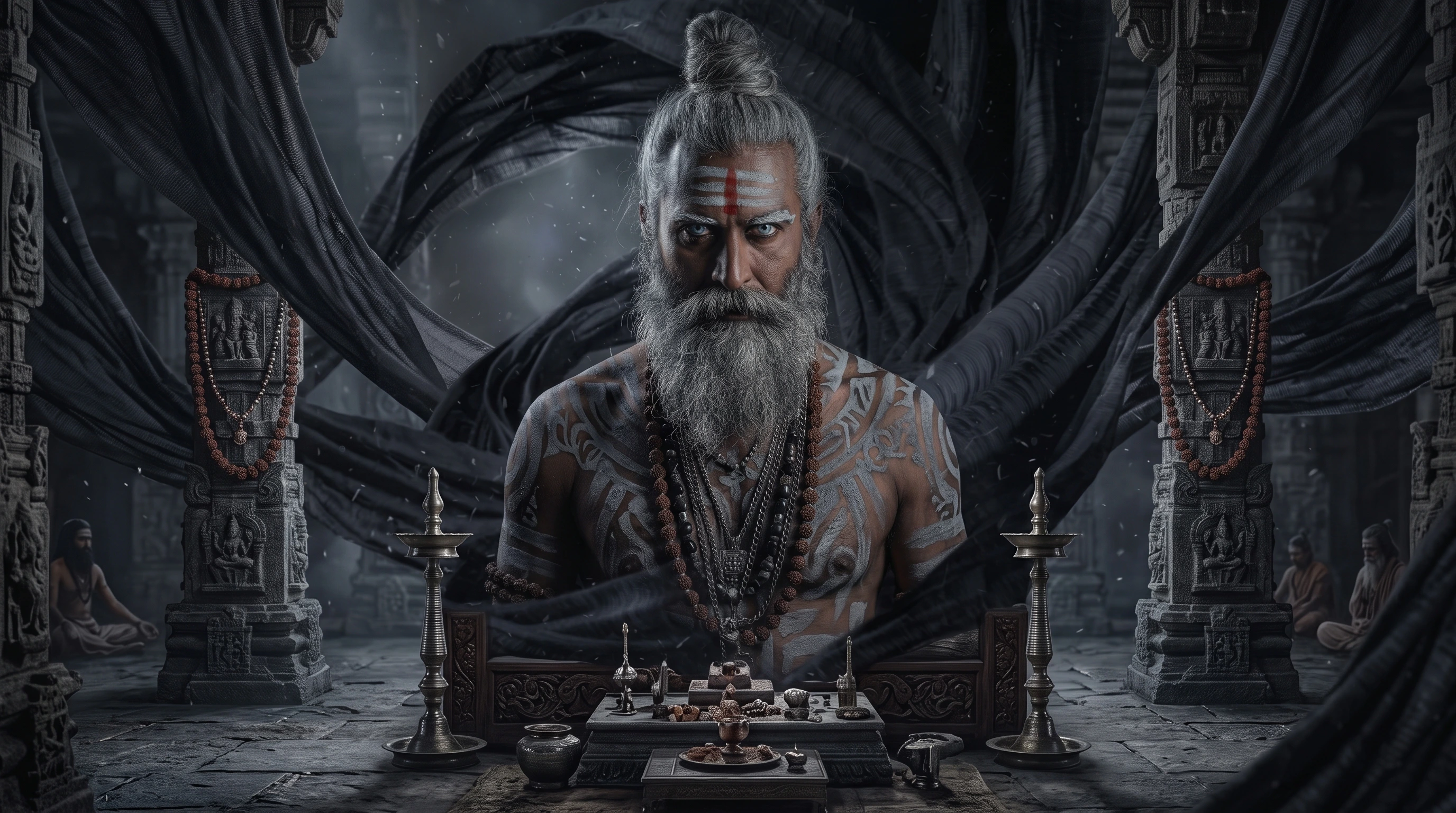
Shukracharya is remembered as a highly learned sage, teacher, adviser and spiritual figure. He is associated with the Bhrigu lineage, the Asuras and Daityas, the legendary Sanjeevani Vidya, the stories of Kacha and Devayani, King Mahabali and Vamana, and the planet Shukra, or Venus.
He is also known by names such as Shukra, Ushanas, Uśanā, Kavya and Bhargava.
In the Bhagavad Gita, Krishna refers to Uśanā among the great seers and thinkers.
So, who was Shukracharya, and why has his name remained important for so long?
Who Was Shukracharya?
Shukracharya is traditionally regarded as the Guru and preceptor of the Asuras and Daityas.
His position is often compared with that of Brihaspati, who is regarded as the Guru of the Devas.
This distinction is important.
Shukracharya was not simply an Asura. He is traditionally described as a learned Brahmin sage who became the teacher and adviser of the Asuras.
His responsibility was to guide those who had accepted him as their Guru.
That role brought him into repeated conflict with the Devas because the Devas and Asuras were frequently portrayed as opposing forces.
Shukracharya therefore became both a spiritual teacher and a political adviser to the Asura kings.
What Does the Name Shukracharya Mean?
The name can be understood as:
Shukra + Acharya
where Acharya means teacher or preceptor.
Shukra is also the name traditionally associated with the planet Venus.
Other names connected with Shukracharya include:
- Shukra
- Ushanas
- Uśanā
- Kavya
- Bhargava
- Kavi
The name Bhargava connects him with the lineage of Sage Bhrigu.
Why Did Shukracharya Become the Guru of the Asuras?
The stories of Shukracharya and Brihaspati are closely connected.
The Devas had Brihaspati as their Guru, while the Asuras accepted Shukracharya as their teacher and adviser.
This created a natural contrast:
Brihaspati → Guru of the Devas
Shukracharya → Guru of the Asuras
But their relationship was not simply about religious rivalry.
The two represented different sides in the repeated struggle between Devas and Asuras, and both were highly learned teachers.
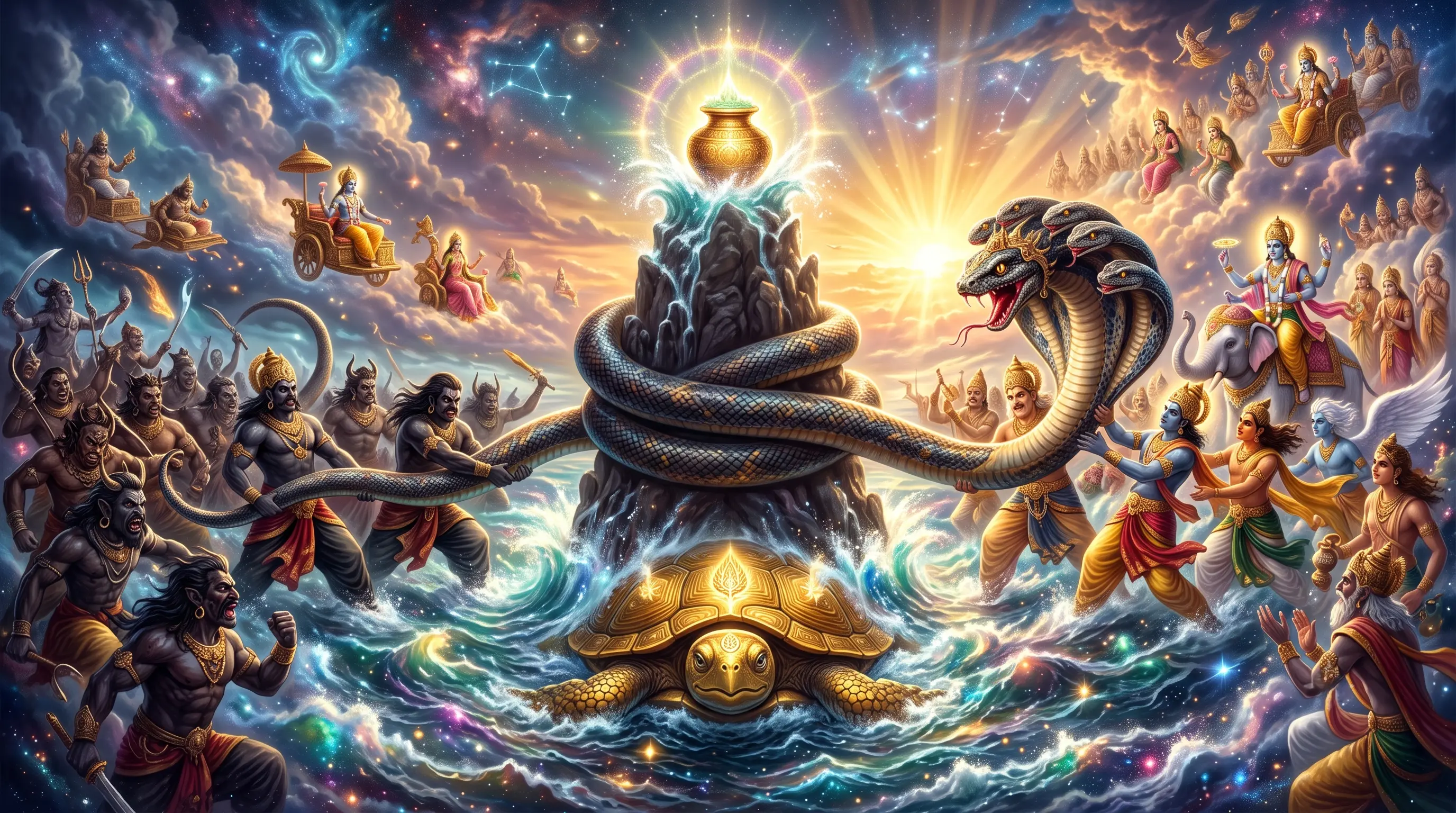
Shukracharya's importance became even greater because he possessed knowledge that could change the outcome of battles.
That knowledge was known as Mritasanjivani or Sanjeevani Vidya.
What Is Sanjeevani Vidya?
Sanjeevani Vidya is the legendary knowledge associated with restoring life to someone who has died.
This is one of the most famous parts of Shukracharya's story.
When Asura warriors died in battles with the Devas, Shukracharya could restore them through this knowledge.
That meant the Asuras could return to battle even after suffering major losses.
Naturally, this worried the Devas.
The knowledge became so important that the Devas eventually sent Kacha, the son of Brihaspati, to become Shukracharya's student.
And this leads to one of the most memorable stories connected with Shukracharya.
The Story of Kacha and Shukracharya
Kacha was the son of Brihaspati, the Guru of the Devas.
The Devas wanted Kacha to learn the secret of Sanjeevani Vidya.
So Kacha went to Shukracharya and respectfully asked to become his student.
Shukracharya accepted him.
This is an important detail.
Even though Kacha belonged to the side of the Devas, Shukracharya accepted him as a student.
Kacha stayed in Shukracharya's household and served his Guru.
During this time, he also became close to Devayani, Shukracharya's daughter.
But the Asuras eventually discovered why Kacha had come.
They feared that he would take Sanjeevani Vidya back to the Devas.
So they killed him.
How Was Kacha Brought Back to Life?
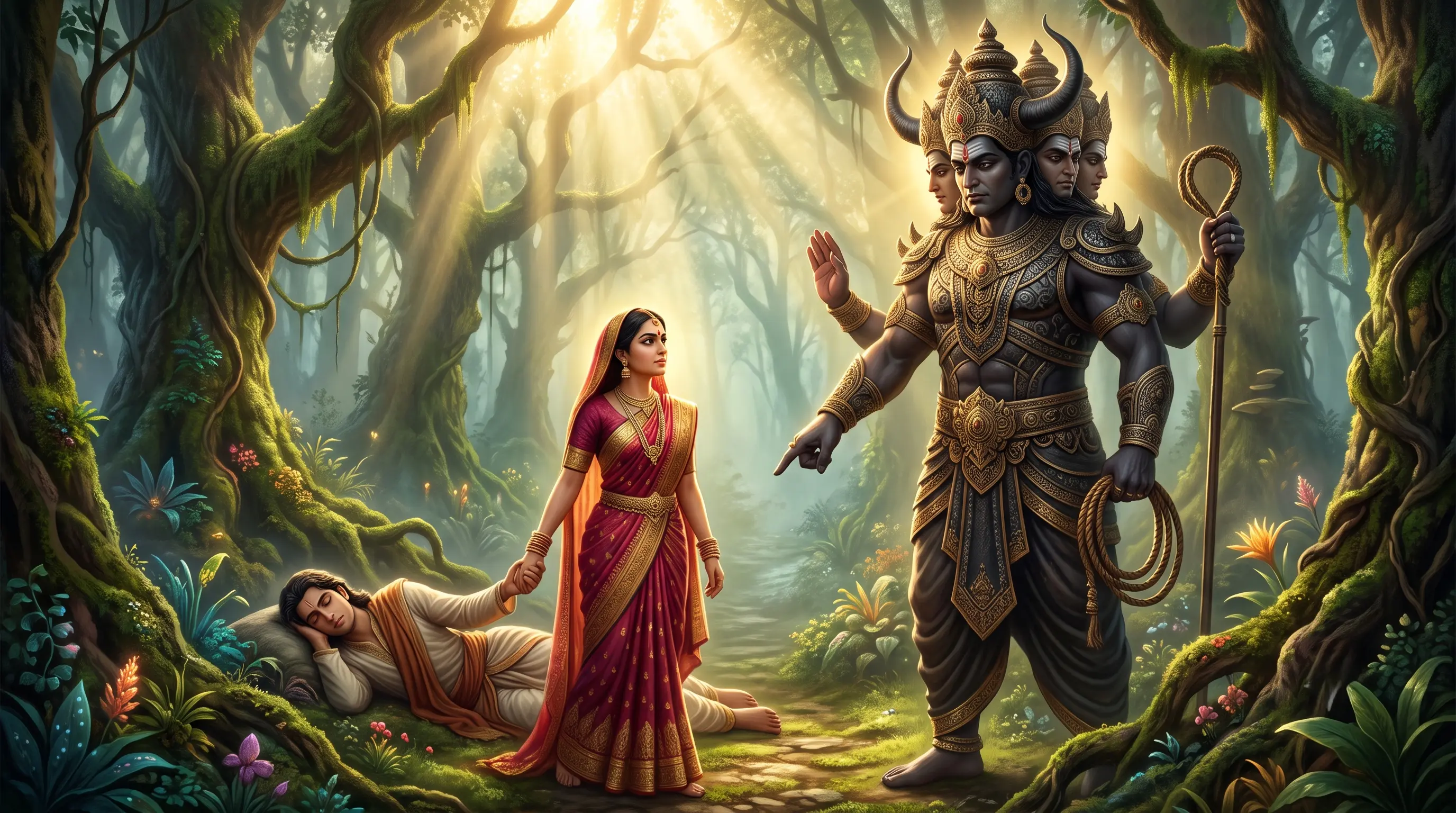
When Devayani learned that Kacha had been killed, she was heartbroken.
She asked her father to bring Kacha back.
Shukracharya used his knowledge and restored Kacha.
But the Asuras killed Kacha again.
Once again, Devayani asked her father to save him.
Shukracharya revived him again.
Finally, the Asuras came up with a more extreme plan.
They killed Kacha, burned his body and mixed his ashes into a drink that Shukracharya consumed.
Kacha was now inside his Guru's body.
When Devayani asked her father to bring Kacha back, Shukracharya faced an impossible situation.
If Kacha came out, Shukracharya would die.
If Kacha remained inside him, Kacha would remain trapped.
So Shukracharya taught Kacha the knowledge necessary to restore life.
Kacha emerged from his Guru's body.
Shukracharya died in the process.
Kacha then used the knowledge he had learned to bring his Guru back to life.
The episode became one of the best-known examples of the relationship between Guru, disciple, knowledge and responsibility.
Shukracharya and Devayani
Devayani was Shukracharya's daughter and one of the central characters in the Kacha story.
She became deeply attached to Kacha.
After Kacha completed his period of study, Devayani wanted him to marry her.
Kacha refused.
His reasoning was complicated by his relationship with Shukracharya. Since he had emerged from Shukracharya's body and had been restored by the knowledge given to him by his Guru, Kacha considered the relationship between himself and Devayani to be unsuitable for marriage.
Devayani became angry and cursed Kacha.
Kacha responded with a curse of his own.
The story did not end there.
Devayani later became connected with King Yayati, and her story became part of an important royal lineage.
The Bhagavata Purana also tells the story of Devayani and Yayati.
Who Was Shukracharya's Daughter?
The best-known daughter of Shukracharya was Devayani.
Her story is important not only because she was Shukracharya's daughter, but also because of her relationship with Kacha and her later marriage to King Yayati.
Her story connects Shukracharya's world of teachers and sages with the royal genealogies associated with Yayati.
Who Was Shukracharya's Wife?
This is one question where it is better to be careful.
Different traditional sources give different accounts.
Jayanti, the daughter of Indra, is named as Shukra's wife in one traditional account.
Other traditions identify Urjjasvati in connection with Shukracharya's family.
Because the sources do not agree on one single account, DivineAdda should not present one name as though it is universally accepted.
This is a good example of how traditional Indian literature can preserve more than one version of the same figure.
Shukracharya and King Mahabali
Shukracharya is also remembered as the Guru and adviser of King Mahabali.
Mahabali was a powerful and generous ruler who had gained great influence.
One day, a young Brahmin named Vamana approached him and asked for three steps of land.
Shukracharya immediately understood that Vamana was not an ordinary visitor.
He recognized the presence of Vishnu behind the request.
Shukracharya therefore warned Mahabali:
Do not make this promise.
He understood that three steps from Vamana could take everything Mahabali possessed.
But Mahabali had already decided to honour his word.
And this created a disagreement between the Guru and his disciple.
How Did Shukracharya Lose His Eye?
When Mahabali was preparing to complete the donation, Shukracharya tried to stop the ritual.
Traditional accounts describe Shukracharya taking a tiny form and blocking the opening of the water vessel.
Without the water being released, the ritual could not be completed.
Vamana used a blade of sacred grass to clear the opening.
Shukracharya's eye was injured.
This is why Shukracharya is traditionally depicted in some accounts as one-eyed.
The episode also reveals something important about his character.
He was not simply trying to defeat Mahabali.
He believed he was protecting his student and the kingdom under his care.
Was Shukracharya Wrong to Stop Mahabali?
This is where the story becomes particularly interesting.
From Shukracharya's point of view, he was giving his Guru's advice.
He understood the identity of Vamana and knew that Mahabali was about to surrender everything.
From Mahabali's point of view, however, a promise once given had to be honoured.
So the story places two responsibilities against each other:
A Guru's duty to protect his disciple
versus
A king's duty to keep his word.
Mahabali ultimately chose to honour his promise.
The story of Vamana and Mahabali therefore continues to be remembered not simply as a contest of power, but as a story about truth, responsibility, loyalty and surrender.
Did Shukracharya Die?
The answer is not as simple as many internet searches suggest.
There is no single universally accepted final death story of Shukracharya.
One important account associated with the Shiva Purana describes Shiva swallowing Shukra.
Shukra remained within Shiva and eventually emerged.
In that account, Shiva ultimately accepted Shukra as a son.
So when someone searches:
“Shukracharya death”
it is more accurate to explain that traditional accounts describe extraordinary episodes involving Shukra, including his being swallowed by Shiva, rather than presenting a simple final death.
Why Did Shiva Swallow Shukracharya?
In the Shiva-related tradition, Shukra becomes involved in the conflict between the Devas and Asuras.
Shiva eventually captures and swallows him.
But Shukra does not simply disappear.
He remains within Shiva, performs spiritual practice and eventually emerges.
The episode adds another important dimension to Shukracharya's story: his connection with Shiva, tapas and spiritual knowledge.
Shukracharya and Shukra, the Planet Venus
Shukracharya is traditionally identified with Shukra, the planet Venus.
This makes him especially important to people interested in Jyotisha or Vedic astrology.
Shukra is associated with qualities such as:
- Love
- Marriage
- Beauty
- Art
- Music
- Luxury
- Comfort
- Pleasure
- Creativity
- Material prosperity
In astrology, a strong or well-placed Venus is traditionally associated with refinement, relationships, artistic ability and enjoyment of material comforts.
This is why Shukra is not only a figure in old stories but also an important name in Indian astrology.
What Is Shukraniti?
Another important association with Shukracharya is Shukraniti, also called Shukranitisara.
It is traditionally attributed to Shukracharya and deals with subjects including:
- Leadership
- Administration
- Governance
- Justice
- Morality
- Economics
- Social organization
- Diplomacy
- Military administration
- Duties of rulers
But there is an important distinction.
The surviving Shukraniti should be described as a work traditionally attributed to Shukracharya.
Its actual date and historical authorship are debated by scholars. Some researchers have proposed much later dates for the text.
So it is better to say:
“Shukraniti is traditionally associated with Shukracharya.”
rather than:
“Shukracharya definitely wrote the surviving text.”
What Does Shukraniti Say About Guna and Karma?
One of the passages frequently discussed in connection with Shukraniti concerns guna and karma.
The text contains a statement that social distinctions should not be understood solely through birth, but through qualities and actions.
This is often summarized as:
Guna — qualities or characteristics
Karma — actions or conduct
This passage has attracted considerable discussion because it presents an important distinction between inherited identity and a person's qualities and actions.
However, the complete Shukraniti also contains discussions of traditional social roles and regulations.
Therefore, it would be misleading to reduce the entire text to a modern slogan such as:
“Shukracharya rejected the caste system.”
A more accurate explanation is:
The Shukraniti contains passages emphasizing guna and karma, while the wider text also discusses traditional social organization.
That distinction matters if DivineAdda wants to publish trustworthy educational content.
Was Shukracharya Evil?
It is easy to call Shukracharya “evil” simply because he was the Guru of the Asuras.
But that is too simplistic.
Look at his actions through the stories.
He:
- taught his disciples,
- protected them,
- revived fallen warriors,
- accepted Kacha as a student,
- advised King Mahabali,
- performed severe austerities,
- pursued extraordinary knowledge,
- and repeatedly acted according to his understanding of his responsibilities.
His loyalty was primarily toward the people who had accepted him as their teacher.
That does not mean every decision he made was presented as correct.
The disagreement between Shukracharya and Mahabali is a good example.
Shukracharya believed Bali should refuse Vamana.
Bali chose to honour his promise.
Both characters were acting from a sense of duty, but they understood that duty differently.
Shukracharya and Goddess Kali
This is an important topic because the search interest around “Shukracharya and Kali” has increased recently.
The first thing to understand is that the current film interpretation should not be presented as an ancient scriptural episode.
The upcoming film Mahakali features Shukracharya and Goddess Kali as major characters. Current reporting identifies Akshaye Khanna as Shukracharya, and the film is scheduled for release on January 8, 2027.
Therefore, DivineAdda should distinguish between:
Traditional accounts of Shukracharya
and
the cinematic interpretation presented in Mahakali.
This distinction will help readers understand what comes from traditional texts and what belongs to modern storytelling.
Shukracharya in the Mahakali Film
The renewed interest in Shukracharya in 2026 is partly connected to the upcoming film Mahakali.
The film has brought Shukracharya back into popular conversation, particularly because of its depiction of the character and his connection with Goddess Kali. Current reports identify Akshaye Khanna as Shukracharya and note the film's January 8 release date.
But readers should remember:
A film is an interpretation.
It should not automatically be treated as a direct translation of one particular scripture.
That distinction is especially important for religious and traditional subjects.
What Can We Learn From Shukracharya?
Shukracharya's story offers several lessons that remain relevant today.
Knowledge carries responsibility
Having knowledge is not enough. A teacher must understand how that knowledge affects others.
A good teacher protects students
Shukracharya repeatedly acts to protect those who depend on him.
Loyalty can be complicated
Shukracharya's loyalty to the Asuras sometimes puts him in direct conflict with powerful divine figures.
Intelligence does not guarantee the final outcome
Shukracharya correctly recognized Vamana, but Mahabali still chose another path.
A Guru can advise, but the disciple must ultimately decide
Mahabali respected Shukracharya but did not follow his advice.
Different traditions can preserve different details
Stories about Shukracharya's family, wife and certain events vary across traditional sources.
Understanding those differences is better than pretending that every source tells exactly the same story.
Shukracharya at a Glance
Detail Information Name Shukracharya Other names Shukra, Ushanas, Uśanā, Kavya, Bhargava Role Guru of the Asuras and Daityas Counterpart Brihaspati Famous knowledge Mritasanjivani / Sanjeevani Vidya Daughter Devayani Famous disciple Kacha Royal disciple Mahabali Planetary association Venus / Shukra Famous episode Vamana and Mahabali Traditional physical mark One injured eye Traditional text association Shukraniti / Shukranitisara Main themes Knowledge, loyalty, leadership, duty and wisdom
| Detail | Information |
|---|---|
| Name | Shukracharya |
| Other names | Shukra, Ushanas, Uśanā, Kavya, Bhargava |
| Role | Guru of the Asuras and Daityas |
| Counterpart | Brihaspati |
| Famous knowledge | Mritasanjivani / Sanjeevani Vidya |
| Daughter | Devayani |
| Famous disciple | Kacha |
| Royal disciple | Mahabali |
| Planetary association | Venus / Shukra |
| Famous episode | Vamana and Mahabali |
| Traditional physical mark | One injured eye |
| Traditional text association | Shukraniti / Shukranitisara |
| Main themes | Knowledge, loyalty, leadership, duty and wisdom |
Timeline
Ancient traditions
Shukracharya becomes associated with the Bhrigu lineage and the Asuras.
Devasura conflicts
Shukracharya serves as the Guru and adviser of the Asuras.
Sanjeevani Vidya
Shukracharya becomes famous for the knowledge associated with restoring life.
Kacha's arrival
Kacha becomes Shukracharya's student.
Kacha and Devayani
Their relationship becomes an important part of the story.
Mahabali and Vamana
Shukracharya warns Bali about Vamana's request.
Vamana episode
Shukracharya's eye is injured while attempting to stop the ritual.
Shiva episode
Traditional accounts describe Shiva swallowing Shukra and his later emergence.
Shukra and Venus
Shukracharya becomes associated with the planet Venus.
Shukraniti tradition
A work on governance and ethics becomes traditionally associated with him.
2026
Shukracharya receives renewed public attention through the upcoming Mahakali film.