The Sacred Wisdom of Samudra Manthan: Churning the Cosmic Ocean
Explore the profound spiritual symbolism of Samudra Manthan, the legendary churning of the ocean of milk, and its deep lessons for our modern daily lives.
The eternal saga of Samudra Manthan, or the Churning of the Cosmic Ocean, is one of the most profound and deeply symbolic narratives in Hindu scripture. Found in the Bhagavata Purana, Vishnu Purana, and the Mahabharata, this epic event is not merely a mythological tale of conflict between gods (Devas) and demons (Asuras). Instead, it serves as a beautiful metaphor for human spiritual evolution, the trials of the mind, and the ultimate pursuit of inner divinity.
The Cosmic Crisis and Divine Counsel
The story begins at a time of great despair for the Devas. Having lost their strength, splendor, and fortune due to a curse by the short-tempered Sage Durvasa, they were easily defeated by the Asuras, led by King Bali. Stripped of their heavenly kingdom, the Devas approached Lord Brahma, who guided them to the preserver of the universe, Lord Vishnu.
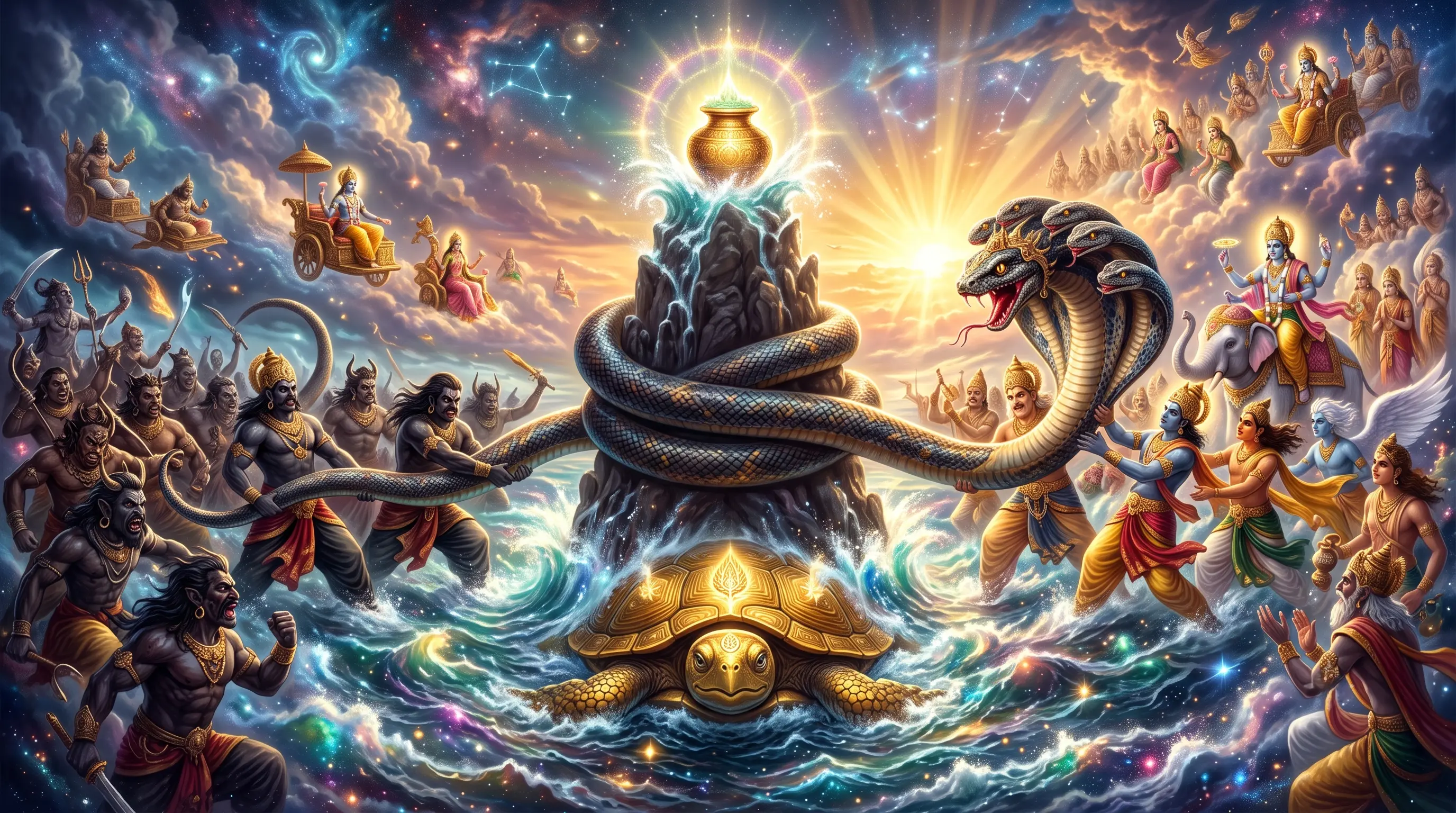
Lord Vishnu offered a masterful diplomatic solution: the Devas must ally with their half-brothers, the Asuras, to churn the ocean of milk (Ksheera Sagara) to retrieve the nectar of immortality (Amrita). Knowing that the task was monumental, both sides agreed to a temporary truce, pooling their combined strength for the ultimate prize.
The Sacred Mechanism of Churning
To execute this grand cosmic task, Mount Mandara was chosen as the churning rod, and Vasuki, the mighty king of serpents, volunteered to serve as the churning rope. However, as the churning began, the heavy mountain started sinking into the soft bed of the ocean.
In His infinite compassion, Lord Vishnu assumed the form of Kurma, a giant tortoise, diving deep into the ocean to support Mount Mandara on His back. This critical moment reminds us that any spiritual endeavor requires a firm, stable foundation of faith and divine support.
The Emergence of Halahala: Facing the Poison First
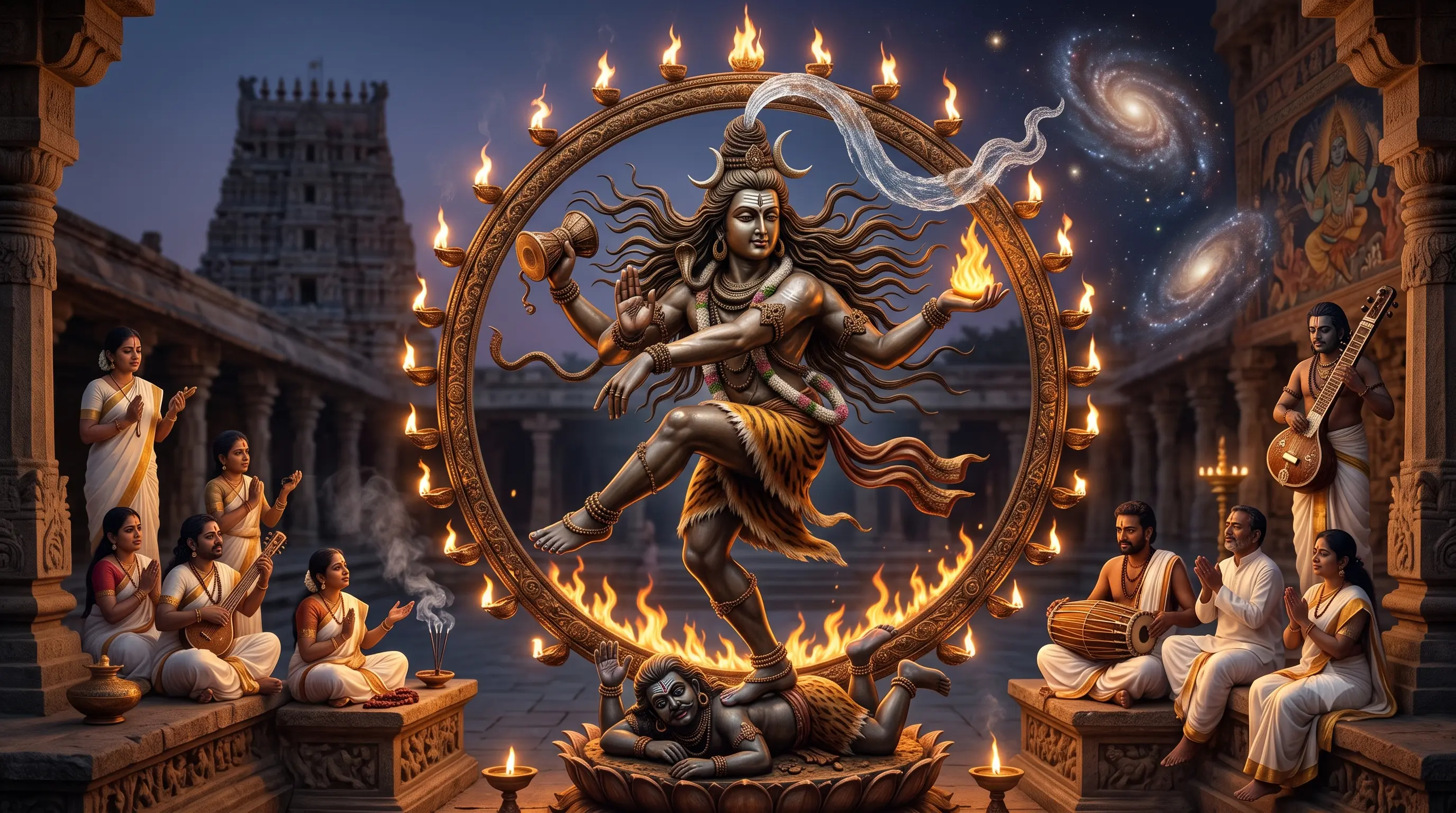
As the Devas pulled Vasuki's tail and the Asuras pulled his head, the violent churning released a devastating, highly toxic poison known as Halahala. The fumes threatened to consume all of creation. Terrified, both sides prayed to Lord Shiva, the supreme ascetic, for protection.
The scriptures recount that out of sheer compassion, the great Mahadev took the suffering of the worlds upon Himself, holding the poison in His throat to protect life.
The poison remained locked in His throat, turning it a deep blue, earning Him the beloved name Neelakantha, the blue-throated protector. This reminds seekers that before accessing inner purity, we must confront and process our deepest hidden poisons.
The Divine Treasures and the Emergence of Lakshmi
With the poison safely contained, the Samudra Manthan resumed, yielding fourteen precious gems (Ratnas). These included:
- Kamadhenu: The wish-fulfilling cow, representing abundance.
- Uchhaishravas: The divine seven-headed horse.
- Airavata: The majestic white elephant of Indra.
- Kaustubha: The most brilliant jewel, worn by Lord Vishnu.
- Parijat: The celestial, fragrant tree that never fades.
Following these emerged Goddess Lakshmi, the deity of wealth, fortune, and purity. She chose Lord Vishnu as Her eternal consort, establishing the divine balance of cosmic order. Finally, Lord Dhanvantari, the divine physician, emerged carrying the golden pot of Amrita, signaling the triumph of the cosmic quest.
Spiritual Wisdom for Contemporary Life
For seekers today, the Samudra Manthan represents the inner journey of self-realization. The mind is the vast ocean of milk. The churning process represents the daily struggles, spiritual practices (Sadhana), and deep introspection we undergo. The poison (Halahala) masterfully symbolizes the negative thoughts, desires, and egos that arise first when we begin to clean our consciousness. Only by remaining steadfast and surrendering these poisons can we hope to uncover our inner treasures and taste the nectar of supreme peace.