Mahagauri and Kanya Puja: The Story of Durga Ashtami (Navratri Day 8
By DivineAdda Editorial Team · How we write · Published
After years of penance, Parvati's complexion darkened, until Shiva bathed her in the Ganga and she became radiant. The story of Mahagauri, and what Sandhi Puja and Kanya Puja mean on Durga Ashtami, 18 October 2026.
Quick facts
- Navratri day
- Day 8 (Ashtami), 18 October 2026
- Form
- Mahagauri
- Mount
- Bull (Vrishabha)
- Arms
- Four (trident, damaru, fearlessness and blessing gestures)
- Key rituals
- Sandhi Puja, Kanya Puja
- Traditional Kanya Puja meal
- Halwa, puri, black chana
From the fiercest form to the calmest
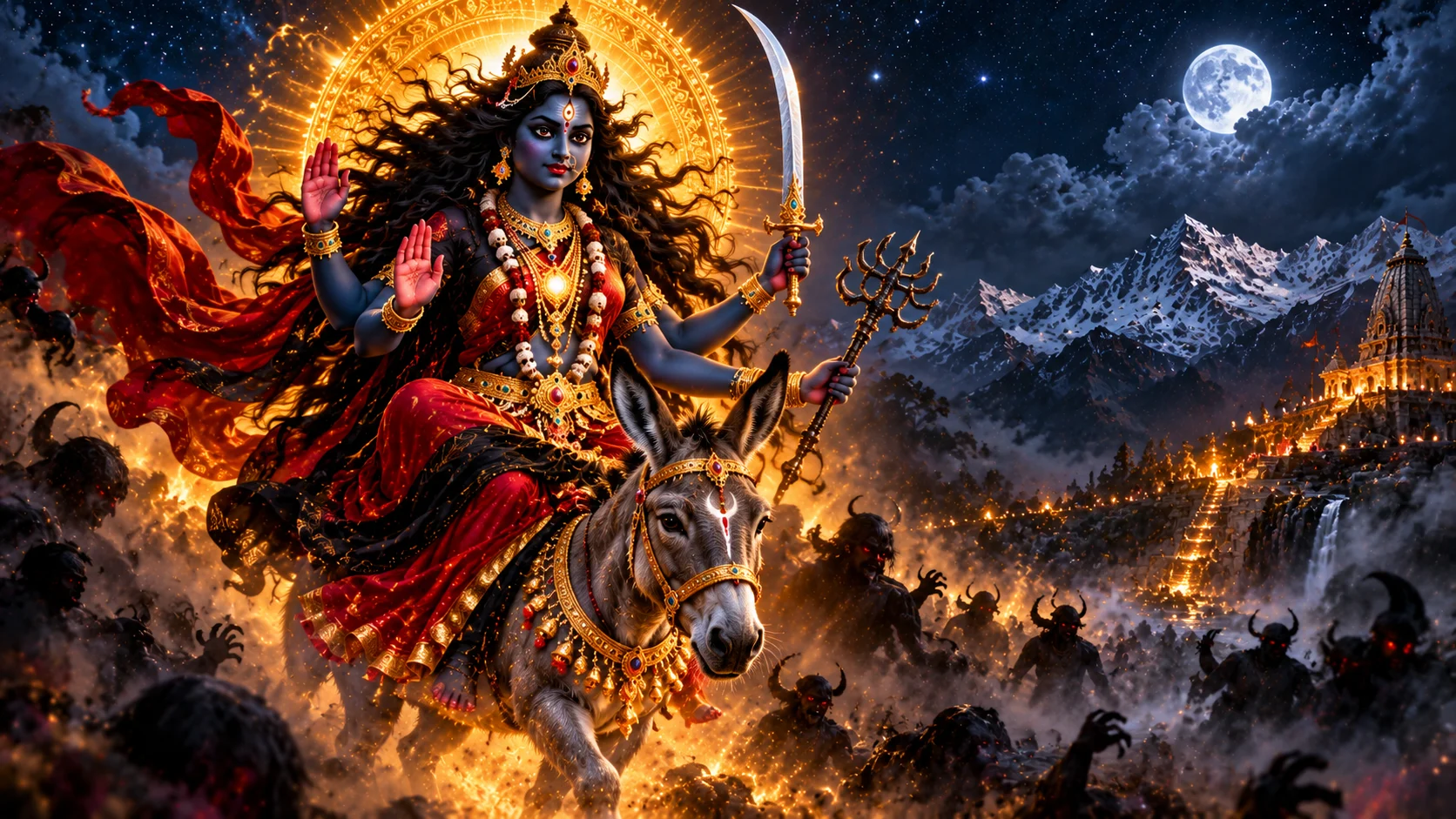
On the eighth night of Navratri, which falls on 18 October in 2026, devotees worship Mahagauri, the eighth form of Durga. After the dark, fierce goddess of Kalaratri, Mahagauri is the Goddess in her calmest and most radiant form. This day is also Durga Ashtami, one of the most important days of the festival, when Kanya Puja and Sandhi Puja are performed.
The penance that darkened her skin
Mahagauri's story goes back to Parvati's penance, which we saw on Day 2 in Brahmacharini. To win Shiva, Parvati spent years in the forest in severe austerity. She endured sun, rain and cold. Over time, her body was covered in dust and her complexion darkened.
Even so, she did not give up her resolve. When Shiva finally accepted her, her devotion had been fully tested.
Bathed in the Ganga
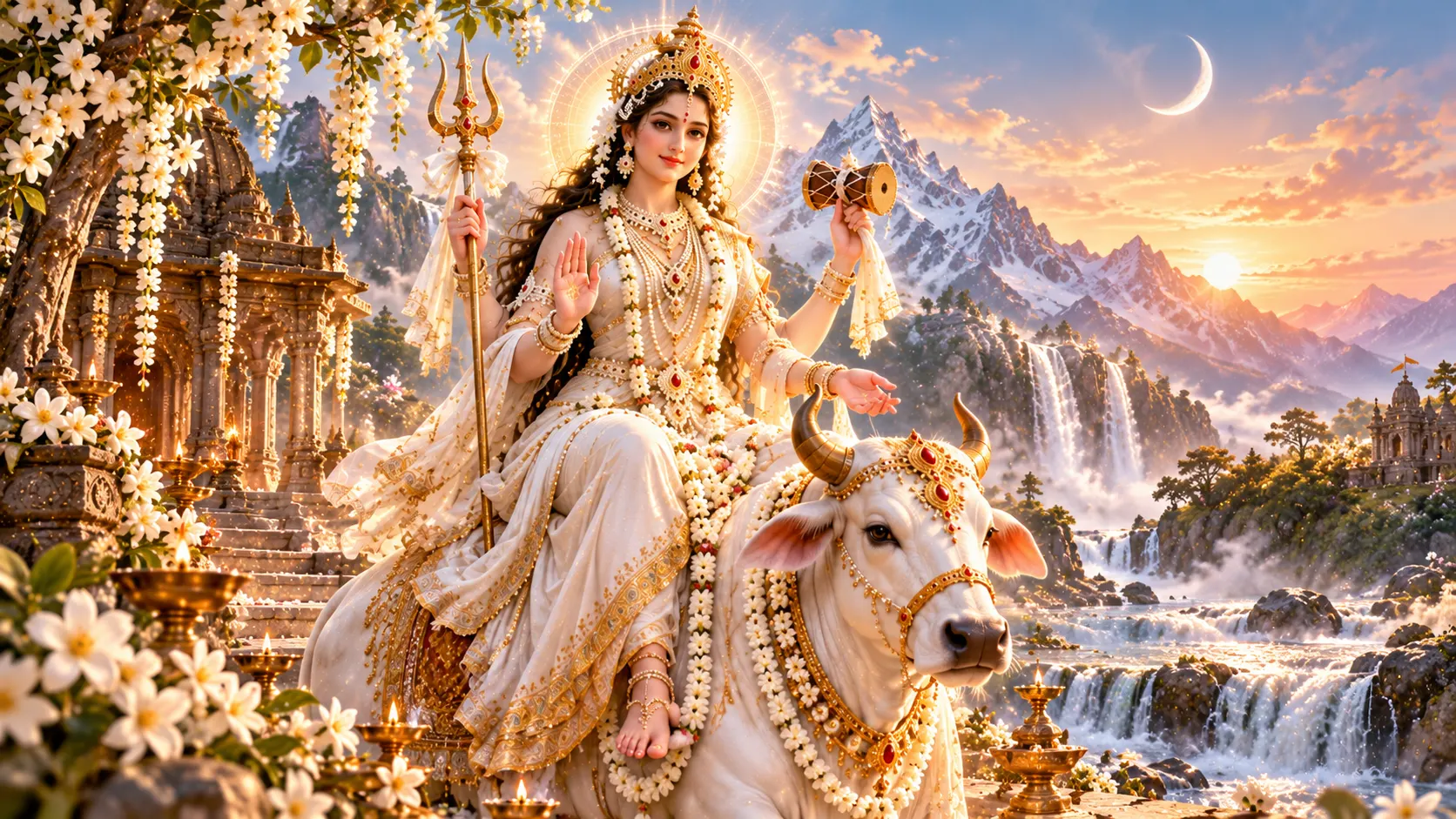
According to tradition, Shiva then bathed Parvati in the sacred waters of the Ganga. As the water touched her, her dark complexion fell away, and she became radiant and luminous. Her glow is described as white as a conch, the moon and the kunda (jasmine) flower.
The name Mahagauri is made of maha (great) and gauri (fair, radiant). It means "the greatly radiant one."
What Mahagauri looks like
Mahagauri is shown with a calm, serene face and a luminous white complexion. Tradition describes her as an eight-year-old girl. She wears white clothes and ornaments and rides a bull (Vrishabha). She has four arms: a trident in one hand, a damaru (small drum) in another, and the remaining two hands in the gestures of fearlessness and blessing. Devotees pray to her for peace, purity and forgiveness.
Durga Ashtami: why this day matters
Durga Ashtami is considered one of the most important days of Navratri. It is especially significant in West Bengal and eastern India, where the main Durga Puja rituals reach their height, and in North India, where families perform Kanya Puja.
Sandhi Puja: the meeting point of two days
Sandhi Puja is performed at the junction (sandhi) of Ashtami and Navami, traditionally during the last 24 minutes of Ashtami and the first 24 minutes of Navami. According to tradition, it was at this very moment that the Goddess, in her Chamunda form, defeated the demons Chanda and Munda. During the puja, 108 lamps are lit and offerings are made. The exact time changes every year and varies by city, so check a local Panchang.
Kanya Puja: worshipping the Goddess in girls
Kanya Puja (also called Kanjak or Kumari Puja) is performed on Ashtami or Navami. Young girls are worshipped as living forms of the Goddess. In most households, it goes like this:
- Invite the girls. Nine girls, usually between two and ten years old, are invited respectfully, one for each form of Durga. Many families also invite one boy, who represents Batuk Bhairav.
- Welcome and worship. Their feet are washed, they are seated on a clean seat, and a tilak is applied.
- Serve the meal. They are offered a simple meal, traditionally halwa, puri and black chana.
- Gifts and blessings. Small gifts such as a chunri, bangles or fruit are given, and their blessings are taken.
The Vaishno Devi story behind Kanya Puja
A well-known folk tradition connects Kanya Puja with Vaishno Devi. According to the story, a devout man named Pandit Shridhar arranged a Kanya Puja during Navratri. Among the girls who came was a radiant child, regarded as Vaishnavi herself. She asked him to invite the whole village to a feast. Although Shridhar had very little, everyone was fed, and then the girl disappeared. The story is told to remind devotees that the Goddess may come in the form of any young girl. This is a devotional tradition, and details vary between tellings.
What the story teaches
Mahagauri's story is about the light that comes after hard effort. Parvati's skin darkened through years of penance, yet in the end, it was her endurance that made her radiant. Kanya Puja carries the same idea into everyday life: the Goddess is present in every girl, and honoring her is a form of worship. For all nine forms in order, see our Navadurga guide, and for dates and rituals, see Sharad Navratri 2026 and our 9 Days, Colours & Significance guide. Next comes Maha Navami, with Siddhidatri and Maha Navami: The Goddess Who Grants Perfection, and then Dussehra on 20 October.
Note on sources: Mahagauri as the eighth form appears in the Devi Kavacha. The account of Parvati's darkened complexion and the Ganga bath comes from popular Puranic retellings and varies between traditions. Sandhi Puja is linked in Bengali tradition to the Chamunda episode of the Devi Mahatmya. The Vaishno Devi account is a regional devotional tradition. Tithi timings differ by region, so confirm Ashtami and Sandhi Puja timings with a local Panchang.
Timeline
Years of penance
Parvati's complexion darkens
Sun, rain and cold in the forest, seen in the Brahmacharini story
Shiva accepts her
The Ganga bath
Her complexion turns radiant, white like a conch, the moon and the kunda flower
Ashtami junction
Sandhi Puja
Last 24 minutes of Ashtami and first 24 minutes of Navami, 108 lamps
Ashtami or Navami
Kanya Puja
Nine girls worshipped as forms of the Goddess
18 October 2026
Navratri Day 8
Mahagauri and Durga Ashtami
Sources & further reading
- Devi Kavacha
- Devi Mahatmya, Shiva Purana
- Kalaratri: Navratri Day 7
- Brahmacharini: Navratri Day 2
- Navadurga: Nine Forms of Durga (pillar)
- Dussehra 2026
DivineAdda Editorial
Scripture research and editorial team
Last updated 18 October 2026