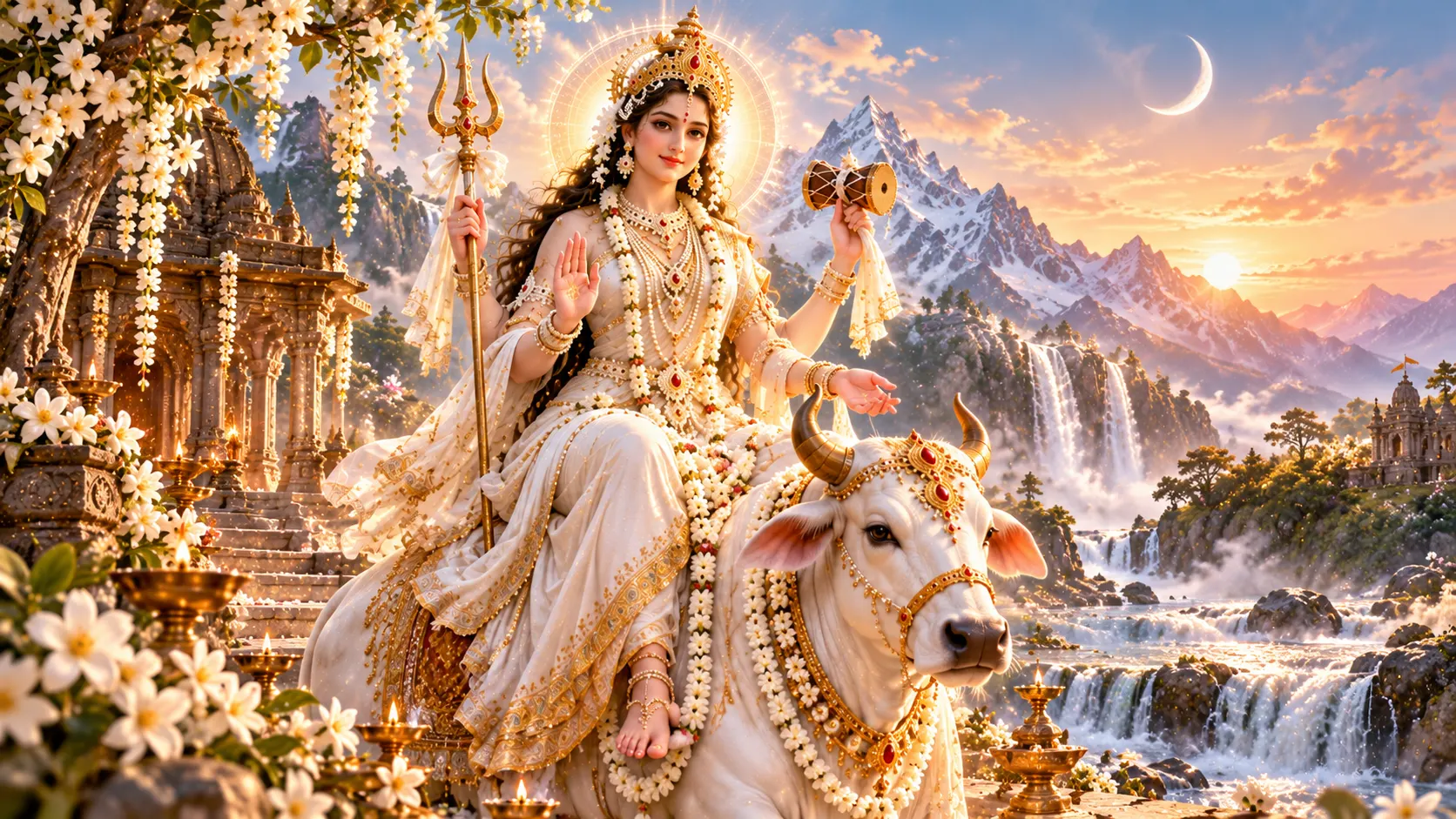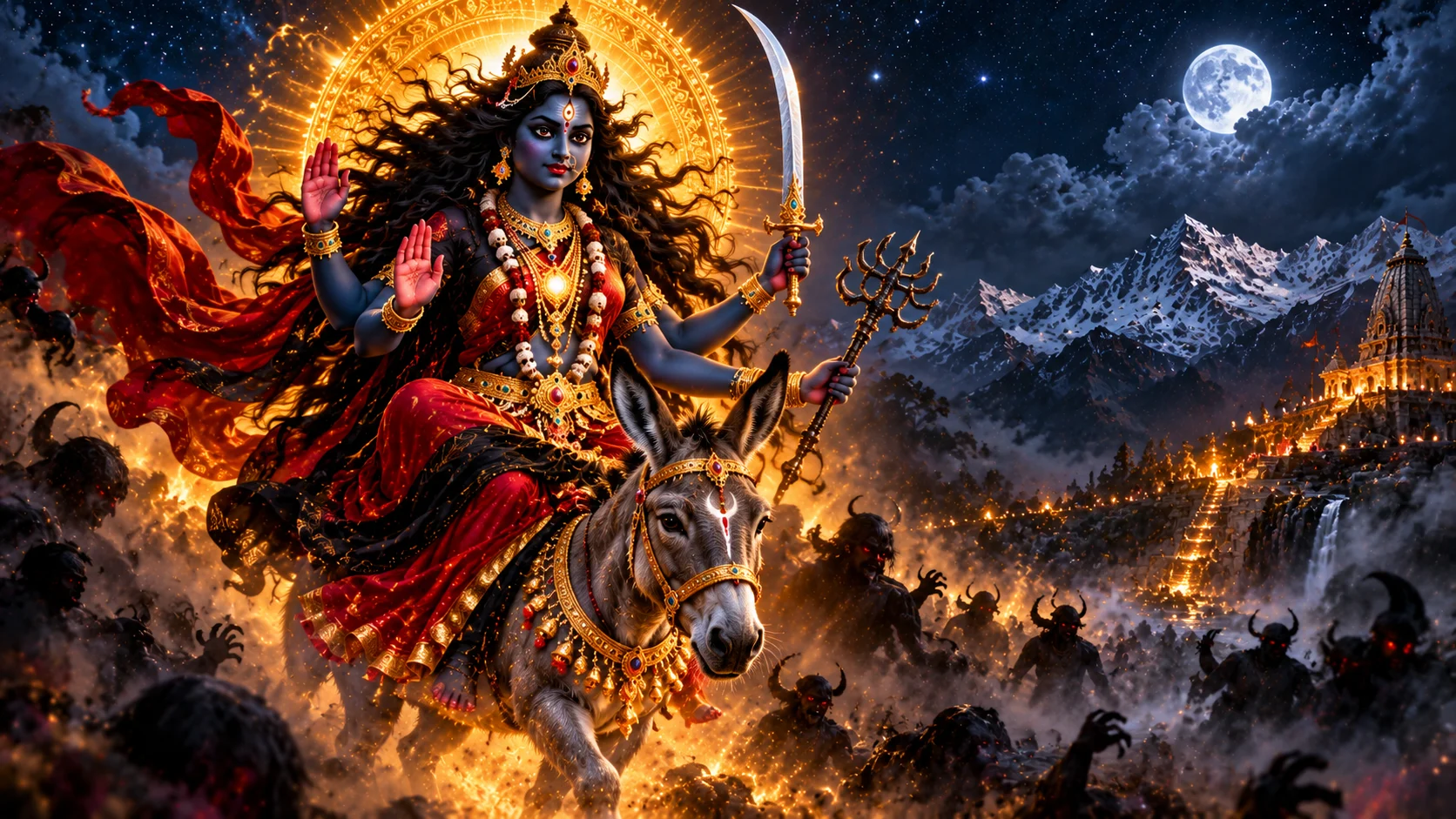

Rama's Untimely Worship of Durga: The Story Behind Dussehra (Vijayadashami 2026)
By DivineAdda Editorial Team · How we write · Published
Before the war with Ravana, Rama worshipped Goddess Durga with 108 blue lotuses, and when one went missing, he was ready to offer his own eye. The Akal Bodhan story that joins Navratri to Dussehra, on 20 October 2026.
Quick facts
- Date
- 20 October 2026
- Also called
- Vijayadashami
- Story source
- Krittivasi Ramayana, Devi Bhagavata Purana (not Valmiki)
- Offering
- 108 blue lotuses
- Ritual name
- Akal Bodhan
- Next festival
- Diwali, 8 November 2026
Where Navratri meets Dussehra
Dussehra, also called Vijayadashami, falls on 20 October in 2026, the day after the nine nights of Navratri end. It celebrates two victories: the Goddess's victory over Mahishasura, told in Durga and Mahishasura, and Rama's victory over Ravana, told in The Story of Ravana. A lesser-known story connects the two: Rama worshipped Durga before the war.
An unusual time to worship the Goddess
This episode is found in the Bengali Krittivasi Ramayana and in the Devi Bhagavata Purana tradition, not in Valmiki's Ramayana. In it, Rama worships Durga in the autumn month of Ashwin, which in tradition is not the usual time to awaken the Goddess. That is why the ritual is called Akal Bodhan, meaning "untimely awakening." According to tradition, it was on the advice of the gods and sages that Rama awakened the Goddess out of season to ask for her help.
This is also why the autumn Durga Puja is often called Sharadiya, the autumn worship, and why it is traced back to Rama.
Rama before the war
Rama faced a powerful enemy in Ravana, who had many boons. In some tellings, Ravana was also a devotee of the Goddess, so Rama needed her blessing all the more. He decided to worship Durga for nine days, which is the origin of the nine nights of Navratri in this tradition.
The 108 blue lotuses
The final offering of the worship required 108 blue lotuses. In the story, Hanuman went far and wide to collect them. Rama began the ritual, offering the lotuses one by one while reciting the Goddess's praise.
The missing lotus
On the last day, Rama was almost at the end of the offering when he noticed that one lotus was missing. According to the story, the Goddess had hidden it to test his devotion. The worship could not be left incomplete.
Then Rama remembered that he is called Kamalnayan, "lotus-eyed," because his eyes resemble lotus flowers. He decided to offer one of his own eyes in place of the missing lotus.
The Goddess appears
As Rama raised his arrow to fulfill his vow, the Goddess appeared at once. She held his hand and stopped him. Pleased by his devotion and his willingness to give everything, she blessed him with victory.
The tenth day: Vijayadashami
On the tenth day, Vijayadashami, Rama defeated Ravana. That is why the day is celebrated as the day of victory.
How Dussehra is celebrated
Different regions celebrate Dussehra in different ways:
- North and West India: Ravana Dahan, the burning of effigies of Ravana, often with Kumbhakarna and Meghnad, after sunset.
- Bengal and eastern India: Sindoor Khela and the immersion of Durga idols, marking the Goddess's farewell.
- Many regions: Shastra Puja (worship of weapons and tools) and the worship of the Shami tree.
- Kerala and South India: Vidyarambham, when young children are introduced to writing and learning on this auspicious day.
From Dussehra to Diwali
Tradition says that Rama returned to Ayodhya about twenty days after Ravana's defeat. That return is celebrated as Diwali, which in 2026 falls on 8 November. You can read that story in Why Diwali Marks Rama's Return to Ayodhya.
What the story teaches
Rama had strength, an army and the support of Hanuman, and yet he was ready to give up his own eye to complete his vow. The story suggests that victory comes from strength joined with humility and complete devotion. For all nine forms of the Goddess before Dussehra, see our Navadurga guide and the story of Siddhidatri and Maha Navami. For dates and rituals, see Dussehra 2026 and Sharad Navratri 2026.
Note on sources: The Akal Bodhan and the 108 lotuses story is found in the Krittivasi Ramayana (the Bengali Ramayana) and the Devi Bhagavata Purana tradition, with differences in detail between tellings. It does not appear in Valmiki's Ramayana. Dussehra customs vary widely by region, and Dussehra timings, including the best time for Ravana Dahan, vary by city, so check a local Panchang.
Timeline
Before the war
Akal Bodhan
Rama awakens the Goddess out of season on the advice of the gods and sages
Nine days
The worship
Rama worships Durga, which is the origin of the nine nights in this tradition
The last offering
The missing lotus
One of the 108 blue lotuses is hidden to test his devotion
The vow
Rama offers his own eye
The lotus-eyed Rama is ready to give up an eye
The blessing
The Goddess appears
She stops him and blesses him with victory
Tenth day, 20 October 2026
Vijayadashami
Rama defeats Ravana
Sources & further reading
- Krittivasi Ramayana
- Devi Bhagavata Purana
- The Story of Ravana
- Durga and Mahishasura
- Siddhidatri and Maha Navami: Navratri Day 9
- Why Diwali Marks Rama's Return to Ayodhya
- Dussehra 2026
DivineAdda Editorial
Scripture research and editorial team
Last updated 20 October 2026