The Story of Shiva Tandav: Why Lord Shiva Dances
Discover the story and spiritual meaning of Shiva Tandav, why Lord Shiva dances as Nataraja, the connection with Sati, and what his cosmic dance teaches us about creation, destruction and transformation.
Quick facts
- Deity
- Lord Shiva
- Form
- Nataraja
- Dance
- Tandav
- Five cosmic acts
- Creation, preservation, destruction, concealment and grace
- Associated hymn
- Shiv Tandav Stotram
- Traditional attribution
- Ravana
The Story of Shiva Tandav: Why Lord Shiva Dances
Shiva Tandav is one of the most powerful and meaningful expressions associated with Lord Shiva. The word Tandav refers to a vigorous and energetic form of dance, but in the story of Shiva, his dance represents much more than movement. It expresses the rhythm of creation, preservation, destruction, transformation and spiritual awakening.
For devotees, the story of Shiva Tandav is closely connected with the image of Lord Shiva as Nataraja, the cosmic dancer. His dance reminds us that nothing in life remains unchanged. Creation and destruction are part of the same eternal cycle, and every ending can make space for a new beginning.
The Story Behind Shiva Tandav
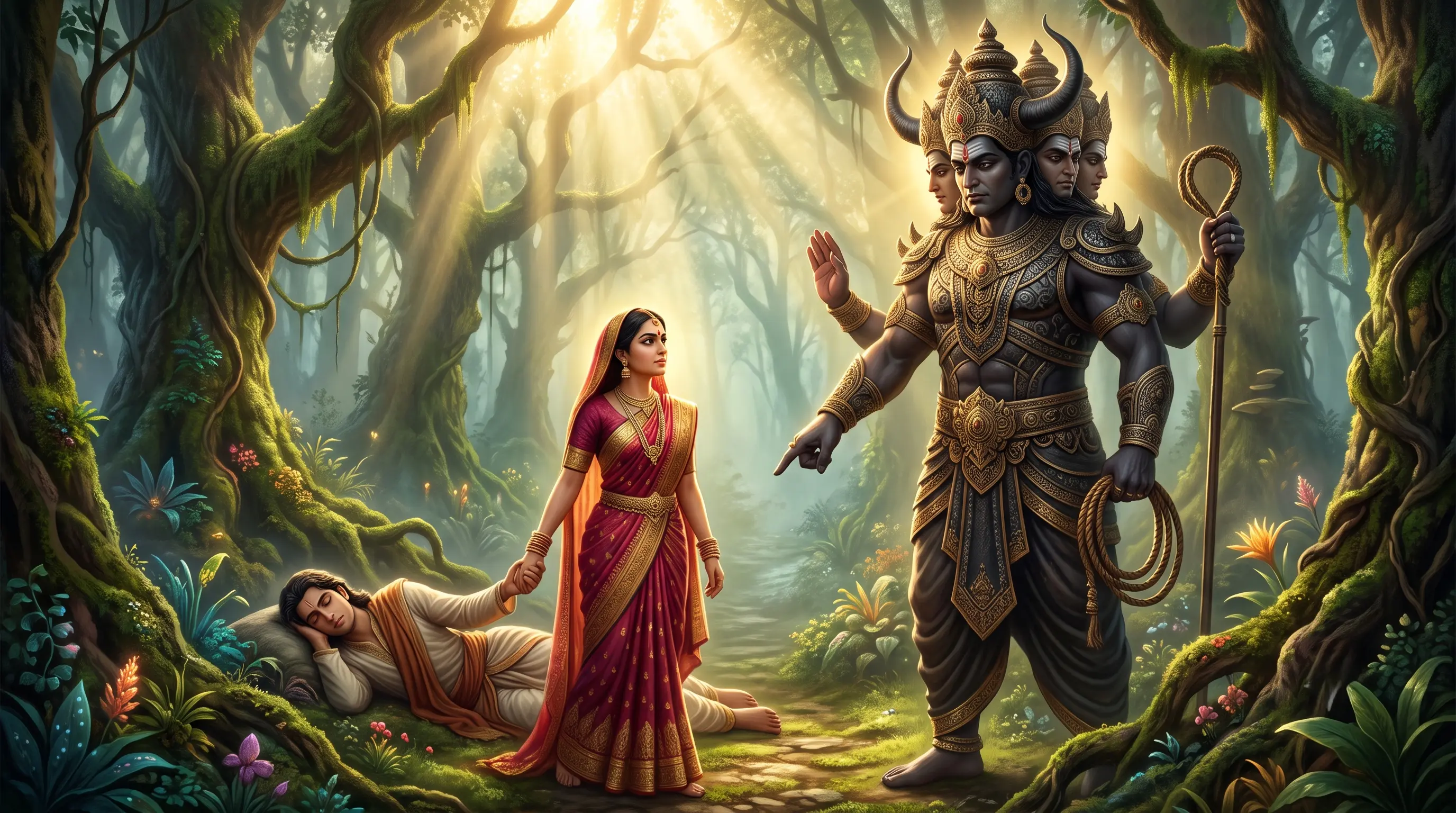
One of the most widely remembered stories connected with Shiva's fierce dance begins with the death of Sati, the first wife of Lord Shiva. Sati was the daughter of King Daksha, who did not accept Shiva as his son-in-law and held a great sacrifice without properly inviting him.
Sati nevertheless went to her father's sacrifice. When she saw that Shiva had been insulted and dishonoured, she was deeply hurt. Unable to accept the disrespect shown toward her husband, Sati gave up her body in the sacrificial fire.
When Lord Shiva learned what had happened, he was overcome with grief and anger. He took Sati's body and moved through the universe in deep sorrow. His grief became so intense that the balance of the world was threatened.
According to the traditional account, Lord Vishnu used his Sudarshana Chakra to separate Sati's body so that Shiva's grief could eventually subside. The places where parts of Sati are believed to have fallen became associated with the Shakti Peethas.
Shiva's fierce expression during this period is remembered through the idea of Rudra Tandav. It represents overwhelming grief, intense energy and the destruction of what can no longer remain in its previous form.
Why Does Lord Shiva Dance?
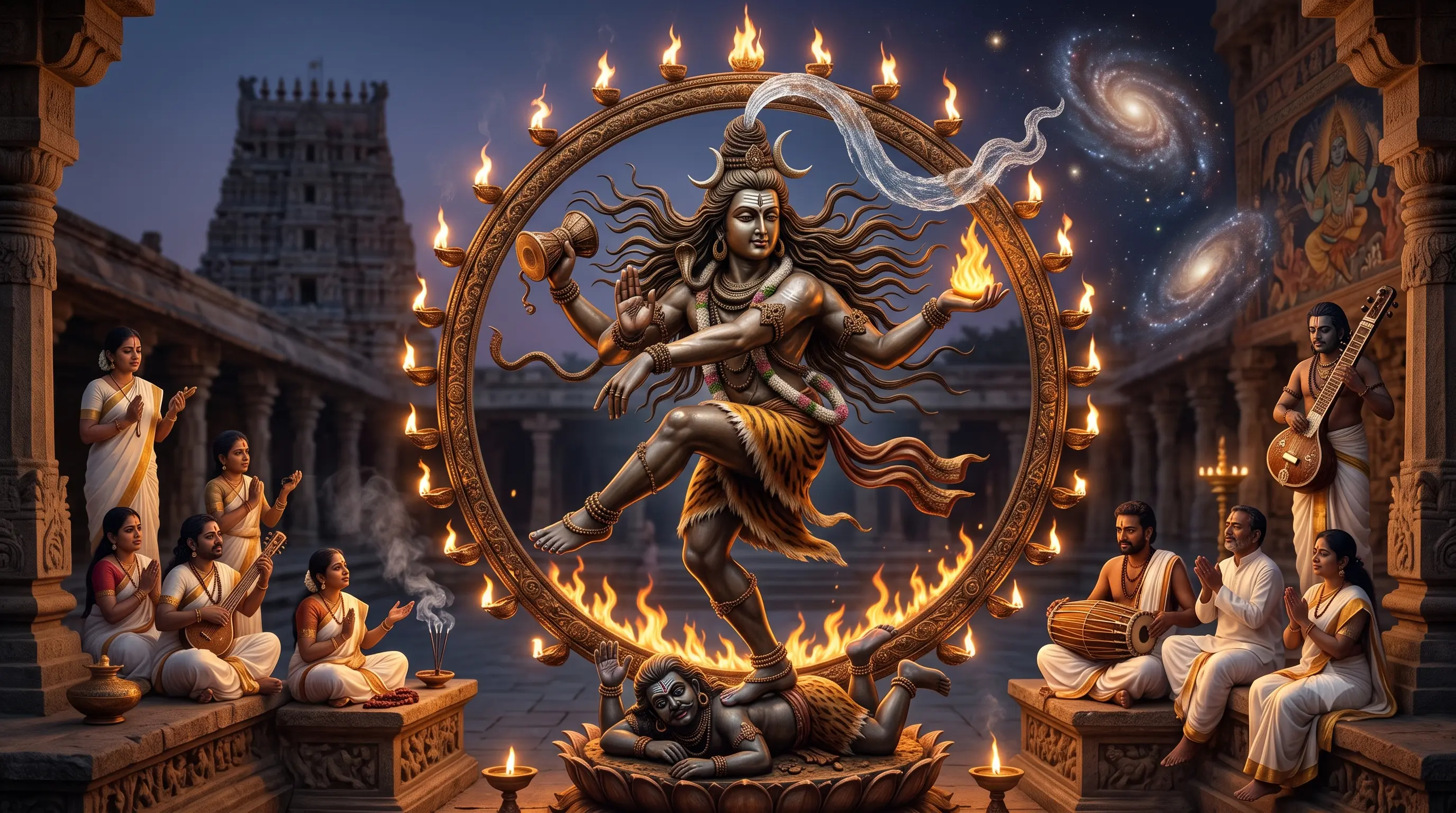
Lord Shiva dances because his dance represents the eternal movement of existence. In the form of Nataraja, Shiva is shown dancing within a circle of flames. This image represents the universe as a constantly changing reality.
His dance can be understood through several cosmic functions. Creation brings something new into existence, preservation sustains it, destruction brings transformation, concealment creates the experience of worldly existence, and grace leads the seeker toward liberation.
This is why Shiva's dance should not be understood only as an expression of anger. It also represents balance, renewal, wisdom and freedom from ignorance.
Shiva Tandav and the Meaning of Nataraja
Nataraja means the Lord of Dance. The traditional image of Nataraja contains several symbolic elements that explain the deeper meaning of Shiva's dance.
Shiva's raised foot represents liberation and the possibility of rising above ignorance. The figure beneath his foot represents Apasmara, commonly associated with ignorance and spiritual forgetfulness. By placing his foot over Apasmara, Shiva symbolizes the overcoming of ignorance.
The circle of flames surrounding Shiva represents the universe and the continuous cycle of existence. His flowing hair expresses the tremendous energy released through the cosmic dance.
The damaru in Shiva's hand is associated with the rhythm of creation and the sound from which existence emerges. His fire represents destruction and transformation. Together, these symbols show that creation and destruction are not opposites but parts of one continuing cycle.
The Five Cosmic Acts of Shiva
The dance of Shiva is traditionally connected with five cosmic activities. These are often described as creation, preservation, destruction, concealment and grace.
Srishti – Creation: The beginning of life and the emergence of new possibilities.
Sthiti – Preservation: The sustaining force that maintains the universe and life.
Samhara – Destruction: The ending of forms and conditions that have reached their natural conclusion.
Tirobhava – Concealment: The process through which the deeper truth remains hidden from ordinary perception.
Anugraha – Grace: The divine grace through which a person moves toward knowledge, freedom and liberation.
Seen in this way, Shiva's dance is not simply about destruction. It describes a complete cycle in which something is created, sustained, transformed and eventually renewed.
Shiva Tandav After Sati's Departure
The story of Shiva after Sati's departure is one of the strongest examples of how the Tandav can express grief and overwhelming emotion. Shiva was not simply angry. He was experiencing profound loss.
His fierce dance represents the intensity of that grief and the immense power that can emerge when ordinary limits are broken. The story also teaches that even the strongest emotions eventually become part of a larger process of transformation.
Later traditions describe the return of divine balance through the birth of Parvati and her reunion with Shiva. The story therefore moves from separation and destruction toward renewal and divine union.
What Is Shiva Tandav Stotram?
Shiva Tandav Stotram is a famous Sanskrit hymn in praise of Lord Shiva. It is traditionally associated with Ravana, the king of Lanka, who is described in traditional accounts as a great devotee of Shiva.
The hymn praises Shiva's powerful form, his matted hair, the Ganga flowing through his locks, the crescent moon, the serpent around his neck and the tremendous energy of his cosmic presence.
For devotees searching for Shiv Tandav Stotram, the hymn is often explored for its rhythm, devotional meaning and powerful description of Lord Shiva.
Shiv Tandav Stotram Lyrics in Hindi and English
Many devotees search for Shiv Tandav Stotram lyrics in Hindi, Shiv Tandav Stotram lyrics in English and easy explanations of the hymn. The original composition is in Sanskrit, while Hindi and English versions are generally provided as transliterations, translations or explanations.
If you are looking for Shiv Tandav Stotram lyrics in Hindi PDF or Shiv Tandav Stotram PDF, it is important to distinguish between the original Sanskrit text, transliteration and translated versions. A translation explains the meaning, while transliteration helps readers pronounce the Sanskrit verses using another script.
For beginners, an easy Shiv Tandav Stotram explanation can be helpful because the Sanskrit verses contain many descriptions and references to Shiva's traditional form.
What Does Shiva Tandav Teach Us?
The story of Shiva Tandav carries a simple message: change is unavoidable. Life contains moments of creation and moments of ending. Holding on to everything forever is impossible, and accepting transformation can become a source of inner strength.
Shiva's dance also reminds us that destruction does not always mean something negative. Sometimes an old habit, attachment, fear or way of thinking has to end before something healthier can begin.
The image of Nataraja therefore becomes a powerful spiritual reminder. The universe continues to move, and human life also moves through different stages. Wisdom comes from learning how to move with change without losing our inner balance.
Why Is Shiva Called Nataraja?
Shiva is called Nataraja because he is traditionally represented as the Lord of Dance. The Nataraja form expresses the idea that the entire universe is governed by rhythm, movement and transformation.
Rather than showing Shiva as completely separate from the world, Nataraja presents him at the centre of the cosmic rhythm. His dance represents the continuous movement of existence and the possibility of liberation from ignorance.
Rudra Tandav and Ananda Tandav
Traditional descriptions of Shiva's dance include different moods and forms. The fierce aspect is associated with Rudra, expressing intense energy, grief and destruction. Another well-known expression is Ananda Tandav, the dance of bliss.
These two ideas show an important aspect of Shiva's nature. Shiva can represent both tremendous power and profound stillness, fierce transformation and spiritual bliss.
The contrast is meaningful because life itself contains opposite experiences. Joy and sorrow, beginnings and endings, movement and stillness can all exist within the same larger reality.
The Spiritual Meaning of Shiva's Dance
The spiritual meaning of Shiva Tandav goes beyond the story itself. The dance can be understood as a reminder that the world is constantly changing and that attachment to temporary things can create suffering.
Shiva's dance encourages us to let go of unnecessary fear and ego. When something ends, it may create the space required for growth. When circumstances change, we can respond with awareness rather than resistance.
This is one reason the image of Nataraja continues to inspire devotees, artists, philosophers and spiritual seekers.
Key Lessons From the Story of Shiva Tandav
Change is part of life: Nothing remains exactly the same forever.
Destruction can lead to renewal: An ending can create the conditions for a new beginning.
Grief can transform: The story of Shiva shows how intense sorrow can become part of a larger process of transformation.
Ignorance must be overcome: The Nataraja image places Apasmara beneath Shiva's foot, symbolizing the victory of awareness over ignorance.
Balance is essential: Shiva's dance combines powerful movement with deep spiritual symbolism.
Why Shiva Tandav Still Matters Today
Even today, the story of Shiva Tandav remains meaningful because people continue to experience loss, change, uncertainty and new beginnings. The story gives a spiritual way of looking at these experiences.
When life changes unexpectedly, the image of Nataraja reminds us that movement is natural. When something ends, it does not necessarily mean that everything has been lost. There can be transformation hidden inside an ending.
For a devotee, listening to or reading Shiv Tandav Stotram can become a way of remembering Shiva's strength, discipline and spiritual energy.
Conclusion
The story of Shiva Tandav is ultimately a story about energy, transformation and the rhythm of existence. Lord Shiva's dance can express grief and fierce power, but in the form of Nataraja it also represents creation, preservation, transformation and grace.
The deeper message is simple: life is always moving. Some chapters begin, some chapters end, and new possibilities appear through change. Shiva's cosmic dance reminds us to face this movement with courage, awareness and devotion.
Whether you came searching for Shiv Tandav Stotram, Shiv Tandav Stotram lyrics in Hindi, Shiv Tandav Stotram lyrics in English, Shiv Tandav Stotram PDF or simply wanted to understand why Lord Shiva dances, the story of Nataraja offers a timeless message: transformation is a natural part of existence.
Timeline
Sati's sacrifice
Sati attends Daksha's sacrifice despite Shiva not being properly invited.
Sati's departure
Sati gives up her body after witnessing the disrespect toward Shiva.
Shiva's grief
Shiva is overcome by grief and carries Sati's body through the universe.
Cosmic balance
Vishnu separates Sati's body according to the traditional account.
Shakti Peethas
Places associated with the falling of Sati's body become sacred Shakti Peetha sites.
Renewal
Later traditions describe Parvati's birth and her reunion with Shiva.