
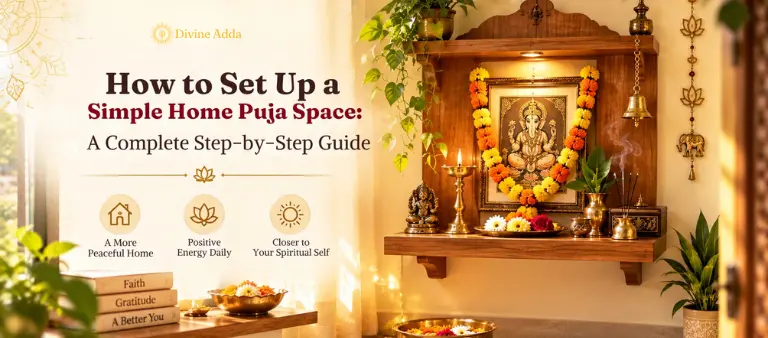
Step 1: Choose the right direction and spot
According to Vastu Shastra, the Northeast (Ishaan) corner of the home is considered the most auspicious location for a puja space, since this direction is associated with spiritual energy and the element of water. If the Northeast isn't available, North or East-facing spots are the next best options — the general principle is that the person performing puja should be able to face East or North while worshipping.
A few placement rules worth following regardless of home size:
- Avoid placing the puja space under a staircase or in a spot that shares a wall with a bathroom or toilet — both are considered to disrupt the sanctity of the space in Vastu.
- Avoid the bedroom if you can help it, though if space genuinely doesn't allow otherwise, a cabinet-style mandir with doors that close is the recommended workaround, since it visually and energetically separates the space when not in use.
- Never place the puja space directly facing the main entrance or in a kitchen corner right next to the stove, since it's considered too close to daily clutter and heat.
Step 2: Pick the mandir or shelf format that fits your space
You don't need an elaborate wooden temple to start. Options that work at every budget and space level:
- A simple wall-mounted shelf — the easiest and cheapest option for small apartments; a single sturdy shelf in the Northeast corner, kept clutter-free, is entirely sufficient.
- A small table-top mandir (chowki) — a low wooden stool or table dedicated only to puja items, placed against a wall.
- A cabinet-style mandir with doors — ideal for shared or multi-purpose rooms, since it can be closed when not in active use.
- A dedicated corner unit or standing mandir — for homes with more space, a proper wooden temple structure with cabinet storage underneath for puja accessories.
Step 3: Gather the essential puja items
A functional home puja space doesn't need to be elaborate, but a few items make daily worship genuinely usable rather than improvised each time:
- Idols or photographs of your family's ishta devata (chosen deity) — commonly Ganesha, Lakshmi, or a family deity, kept to a small, manageable number rather than an overcrowded shelf
- A diya (oil lamp) or lamp stand, ideally brass or another metal considered auspicious
- An incense holder (agarbatti stand)
- A small bell (ghanti), rung at the start and end of puja
- A kalash (small water vessel), often with a coconut and mango leaves for special occasions
- A plate for offerings (thali), holding kumkum, haldi, rice, and flowers
- A small asana or mat to sit on while performing puja
- A cloth or runner to cover the shelf or table, ideally in yellow, red, or another auspicious colour, changed and washed regularly
- Storage — a drawer or small basket to keep spare wicks, matches, and extra puja items out of sight but within reach
Step 4: Keep the space genuinely clean, not just decorated
A puja space is meant to stay visually and physically clean at all times — this matters more in Vastu terms than how expensive or elaborate the setup is. A daily wipe-down of the shelf or table, regular washing of the cloth covering, and prompt removal of wilted flowers or old prasad are treated as basic upkeep, not optional extras. Clutter — unrelated items stored on or near the puja shelf simply because there's space — is specifically discouraged, since it's believed to interfere with the space's energy the same way it does elsewhere in the home under Vastu principles.
Step 5: Add lighting and colour thoughtfully
Natural light is preferred where possible; if the space doesn't get any, a small warm-toned LED light dedicated to the shelf works well and is now common in even elaborate mandir setups. In terms of colour, white, light yellow, and light blue are generally considered calming and appropriate backdrop colours for a puja space, while heavy, dark colours are typically avoided directly behind the deities.
A simple daily and weekly routine
Once the space is set up, a lightweight routine keeps it functional without becoming a burden:
- Daily — light a diya or incense, offer a short prayer, and wipe down the surface if needed.
- Weekly — change the cloth covering, refresh any wilted flowers, and do a quick dusting of idols and frames.
- Monthly or before major festivals — a deeper clean, including polishing metal items and reorganizing the storage drawer.
The point of setting it up properly
A home puja space isn't judged, in either Vastu or general tradition, by its size or cost — a clean, well-directed shelf in a one-bedroom apartment fulfills the same purpose as an elaborate temple room in a larger home. What both share is intention: a space set aside deliberately, kept clean consistently, and used regularly, rather than assembled once and left to gather dust. That consistency, more than any specific item on the list, is what a proper puja space is actually built around.