
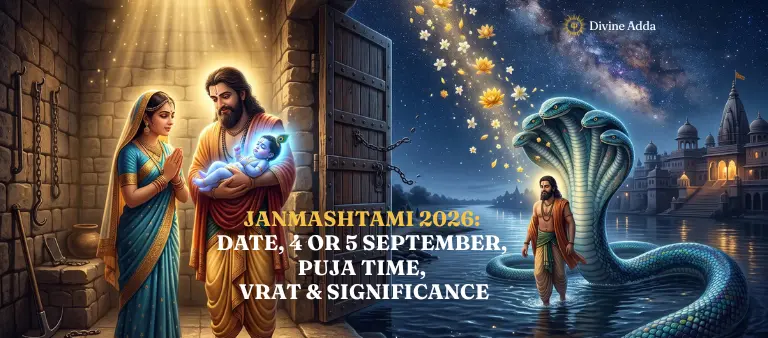
Janmashtami 2026: Date, 4 or 5 September, Puja Time, Vrat & Significance
Janmashtami 2026 is on 4 September. Discover the date, 4 or 5 September confusion, puja time, vrat rules, Nishita Kaal and Krishna worship rituals.
Janmashtami 2026 is one of the most important Hindu festivals dedicated to Lord Krishna. Devotees celebrate the divine birth of Shri Krishna with fasting, midnight puja, bhajans, Krishna naam jap, temple visits and devotional celebrations.
If you are searching for Janmashtami 2026 kab hai, Janmashtami 2026 date, or wondering whether Krishna Janmashtami falls on 4 or 5 September 2026, this complete guide explains the date, fasting, puja timing, significance, rituals and frequently asked questions.
When Is Janmashtami 2026?
Krishna Janmashtami 2026 will be observed on Friday, 4 September 2026, in India.
The festival is associated with the Ashtami Tithi of Krishna Paksha in the month of Bhadrapada. The exact puja and fasting timings can vary by city because Hindu festivals are calculated according to local sunrise, sunset and tithi timings.
Janmashtami 2026: 4 or 5 September?
One of the most common searches is "Janmashtami 2026 4 or 5 September?"
The main Janmashtami observance is 4 September 2026. However, the midnight celebration extends into the early hours of 5 September in many places.
This is why some people may see 5 September mentioned in connection with Janmashtami. The difference is generally related to the midnight puja timing and local observance.
Why Is Krishna Janmashtami Celebrated?
Krishna Janmashtami commemorates the birth of Lord Krishna, traditionally regarded as the eighth avatar of Lord Vishnu.
According to Hindu tradition, Krishna was born in Mathura to Devaki and Vasudeva at midnight. His birth is celebrated as the arrival of divine consciousness and the restoration of dharma.
The festival carries an important spiritual message: when darkness and injustice increase, divine wisdom can guide humanity back toward dharma, compassion and truth.
Spiritual Significance of Janmashtami
Janmashtami is not only a celebration of Krishna's birth. For devotees, it is also a time for self-reflection, devotion and spiritual discipline.
The festival is an opportunity to:
- Remember Lord Krishna and His teachings
- Practice devotion and gratitude
- Observe fasting and self-discipline
- Chant Krishna mantras
- Read or listen to stories from Krishna's life
- Participate in midnight Krishna puja
- Spend time in prayer and meditation
Janmashtami 2026 Puja Time
The most important worship period is around Nishita Kaal, the midnight period traditionally associated with Krishna's birth.
Because tithi and sunrise calculations vary by location, the exact Nishita Kaal and puja timing can differ between cities.
Devotees should check a reliable local Panchang for the exact time in their location before beginning the main puja.
Janmashtami 2026 Vrat: Fasting Rules
Many devotees observe a fast on Janmashtami and break it according to their tradition and local Panchang.
Common foods consumed during Janmashtami vrat may include:
- Fresh fruits
- Milk and dairy products
- Sabudana
- Singhara or kuttu preparations
- Dry fruits and nuts
- Coconut water
- Other vrat-friendly foods
Fasting practices differ between families, regions and religious traditions. Devotees should follow the vrat rules traditionally observed in their household or community.
How to Perform Krishna Janmashtami Puja at Home
You can observe Janmashtami at home with a simple devotional puja.
- Clean the puja area and take a bath.
- Decorate the space with flowers and traditional decorations.
- Place an image or murti of Shri Krishna.
- Offer flowers, Tulsi leaves, fruits and devotional offerings.
- Chant Krishna mantras or read Krishna-related scriptures.
- Perform the main worship around the appropriate midnight period.
- Offer bhog and perform aarti.
- Continue devotional practices according to your family tradition.
Why Is Tulsi Important in Krishna Worship?
Tulsi holds a special place in Vaishnava traditions and is commonly offered in Krishna worship.
Devotees consider Tulsi sacred and associate her with devotion to Lord Vishnu and Krishna.
Offering a clean Tulsi leaf during Krishna puja is a simple devotional practice performed with faith and sincerity.
Janmashtami 2026 and Dahi Handi
Dahi Handi is a popular celebration associated with Krishna's childhood stories, particularly his playful love of butter and curd.
Groups form human pyramids to reach and break a pot traditionally filled with curd or other offerings. The celebration is especially popular in Maharashtra and several other parts of India.
The date of Dahi Handi celebrations can vary according to local traditions and festival calendars.
What Can You Do on Janmashtami 2026?
You do not need an elaborate celebration to observe Janmashtami meaningfully.
You can:
- Visit a Krishna temple
- Listen to Krishna bhajans
- Read about Krishna's life and teachings
- Chant the Hare Krishna Mahamantra
- Offer Tulsi and fruits during puja
- Observe a vrat according to your tradition
- Spend midnight in prayer and devotion
- Decorate a small Krishna altar at home
- Prepare traditional bhog for Shri Krishna
Janmashtami and the Bhagavad Gita
Krishna's teachings in the Bhagavad Gita remain an important part of Hindu philosophy.
The Gita emphasizes dharma, disciplined action, devotion, knowledge and maintaining balance during difficult circumstances.
Janmashtami can therefore be an opportunity not only to celebrate Krishna's birth but also to reflect on His teachings and bring greater awareness into everyday life.
Janmashtami 2026: Quick Summary
Festival: Krishna Janmashtami 2026
Main Date: Friday, 4 September 2026
Deity: Lord Krishna
Main Observance: Fasting, Krishna Puja and Midnight Celebration
Important Worship Period: Nishita Kaal / Midnight
Dahi Handi: Observed according to local tradition and calendar