
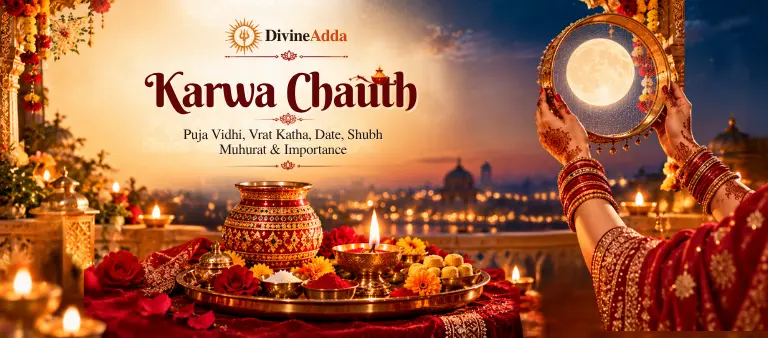
Karwa Chauth 2026 falls on Thursday, 29 October 2026. The fast runs from sunrise to moonrise, the evening puja muhurat is about 5:38 PM to 6:56 PM (Delhi), and the moon rises at roughly 8:17 PM. Timings shift by city, so confirm yours before you break the fast. Everything below is in the order you will need it: date, timings, sargi, puja vidhi, katha, and the questions people ask most.
Karwa Chauth 2026 Date: When Is Karwa Chauth?
Karwa Chauth is observed on Kartik Krishna Chaturthi in the Purnimanta calendar used across North India. (In the Amanta calendar the same day is called Ashwin Krishna Chaturthi.) In 2026 it falls on Thursday, 29 October, about ten days before Diwali on Sunday, 8 November.
Is it 28 or 29 October? A few websites list 28 October. The vrat is decided by the Chaturthi tithi that is present at moonrise, because the fast is broken only after sighting the moon. In 2026 the Chaturthi tithi begins in the early hours of 29 October and runs until about 10 PM that night, so it covers moonrise on 29 October. That is why most panchangs give Thursday, 29 October.
Karwa Chauth 2026 Puja Muhurat and Moonrise Time
These timings are for New Delhi. Treat them as a guide and check a local panchang for your city.
- Fast begins: sunrise, around 6:30 AM
- Puja muhurat: about 5:38 PM to 6:56 PM
- Moonrise (chand nikalne ka time): about 8:17 PM
- Fast ends: after moonrise, once you have offered arghya to the moon
Why does moonrise change from city to city? Moonrise depends on your longitude and latitude. Cities in the east, such as Kolkata and Guwahati, usually see the moon earlier. Cities in the west, such as Mumbai and Ahmedabad, see it later. Because the moon rises about 45 to 50 minutes later each night after the full moon, Karwa Chauth moonrise comes well into the evening. Cloud cover can delay the actual sighting, but the panchang time is what counts for the ritual.
What Is Karwa Chauth and Why Is It Observed?
"Karwa" means an earthen pot with a spout, and "Chauth" means the fourth day. On this day, mostly in Punjab, Haryana, Delhi, Uttar Pradesh, Rajasthan, Madhya Pradesh and Himachal Pradesh, married women fast from sunrise to moonrise and pray for the well-being and long life of their husbands.
The day is dedicated to Shiva, Parvati, Ganesha and Kartikeya, the divine family seen as the ideal of a harmonious marriage. Chaturthi is also Ganesha's tithi, so his blessing is invoked to remove obstacles. The moon is worshipped because it is linked to the mind, calm and long life, and in Shaiva tradition Shiva wears the crescent moon on his head.
The festival has two older roots: the practice of women exchanging karwas as a symbol of friendship (the "karwa sakhi" tradition), and the vrat katha stories told below.
Sargi on Karwa Chauth 2026: Time, Meaning and What to Eat
Sargi is the pre-dawn meal that begins the fast. It is traditionally prepared by the mother-in-law and given to the daughter-in-law as a blessing. If you do not live with your mother-in-law, mothers, elder women or the family can prepare it.
Sargi time: eat in the pre-dawn hours and finish before sunrise (about 6:30 AM in Delhi). The earlier you eat within that window, the better it sustains you through the day. Do not eat or drink after sunrise.
What to include in a sargi thali:
- Fruits such as banana, apple and pomegranate
- Dry fruits, nuts and dates
- Coconut water and plain water in good quantity
- Sweets such as feni with milk, sevaiyan or kheer
- Mathri, paratha or a light, non-spicy meal
- Fresh fruit juice or lassi, and a small gift or shringar item as a blessing
Tip for a smoother fast: choose slow-digesting foods (nuts, fruit, whole grains) and drink water steadily before sunrise. Avoid very salty or spicy food and too much tea or coffee, since these increase thirst.
Karwa Chauth Puja Samagri (Thali Checklist)
- Karwa (earthen or brass pot) with a lid, filled with water
- Chhalni (sieve) and a diya
- Roli, kumkum, haldi, sindoor and akshat (whole rice)
- Moli (sacred thread), flowers, incense and camphor
- Sweets, mathri and fruit for offering
- A picture or idol of Shiva-Parvati-Ganesha-Kartikeya, or Gauri made of clay or paste
- Shringar items such as bangles and bindi, plus a gift (baya) for the mother-in-law
If you are building a puja corner at home, read our guide on how to set up a simple home puja space.
Karwa Chauth Puja Vidhi: Step by Step
- Wake before dawn and eat sargi. Finish before sunrise, then brush, bathe and wear fresh clothes.
- Take the sankalp at sunrise. With folded hands, say your intention to keep the vrat for your family's well-being. A simple prayer in your own words is enough.
- Observe the day calmly. Spend time in prayer and light household work. Avoid anger and arguments, and keep the mind peaceful.
- Get ready in the afternoon. Many women wear red, maroon or other bridal-style colours and apply mehndi and the traditional solah shringar. Colours are a custom, not a rule.
- Set up the puja space before the muhurat. Place the deities on a clean platform, light the diya and arrange the thali with the karwas filled with water.
- Perform the puja in the muhurat (about 5:38 PM to 6:56 PM). Offer roli, rice and flowers to Shiva, Parvati, Ganesha and Kartikeya. Tie moli on the karwa.
- Listen to or read the Karwa Chauth katha. Sit with the other women, hold the thali and pass it around (pheri) in the traditional way while the katha is recited.
- Wait for the moon. When the moon rises (about 8:17 PM in Delhi), look at it through the chhalni with a lit diya inside.
- Offer arghya to the moon. Pour water from the karwa toward the moon with folded hands, then turn and look at your husband through the same sieve.
- Break the fast (parana). Your husband offers you the first sip of water and a bite of sweet from his hand. After this, have a light meal.
- Seek blessings. Touch the feet of elders and give the baya (gift) to your mother-in-law or an elder woman.
Karwa Chauth Katha (Vrat Katha)
Several stories are told on Karwa Chauth. The best known is the story of Queen Veervati.
The story of Veervati
Veervati was the only sister of seven loving brothers. After her marriage she came home for her first Karwa Chauth and began her first fast. By evening she was weak with hunger and thirst, and she sat waiting for the moon to rise.
Her brothers could not bear to see her suffering. They tried to persuade her to eat, but she refused until the moon appeared. So they planned something to help her. One brother climbed a tree and held a lamp behind a sieve so it looked like the moon rising. The others called to her that the moon had risen.
Believing it, Veervati offered her prayers and broke her fast. At that moment, she received news that her husband, the king, had fallen gravely ill or died. Heartbroken, she hurried to his palace.
On the way she met Goddess Parvati, who told her the fast had been broken before the real moonrise, and that this had caused the loss. Veervati accepted her mistake and, with deep devotion, observed the fast again the following year with full rules. Pleased with her sincerity, Parvati blessed her and her husband was restored to health.
What the story teaches: the fast is completed only with sincere devotion and patience. It is why the vrat is broken only after the real moonrise.
Other Karwa Chauth stories
- Karva and the crocodile: A devoted wife named Karva saved her husband from a crocodile by binding it with a cotton thread and calling on Yama, the lord of death, who spared her husband's life because of her devotion.
- Draupadi and the Pandavas: In a story from Mahabharata-linked vrat traditions, Draupadi asked Krishna for help when the Pandavas faced difficulty. He advised her to keep the Karwa Chauth vrat, and the trouble passed.
- Savitri and Satyavan: Savitri's devotion and wisdom won back her husband's life from Yama. This story is often told alongside Karwa Chauth as an example of a wife's steadfast faith.
These versions differ by region and family. All carry the same message: devotion, patience and love within marriage.
Rules and Do's and Don'ts for the Karwa Chauth Fast
- Do not eat or drink from sunrise until the moon is sighted and arghya is offered. Many observe the fast without water (nirjala).
- Eat sargi only before sunrise.
- Avoid anger, harsh words and arguments, and avoid cutting, sewing or sharp work if your family follows that custom.
- Dress in your traditional best and keep your shringar, as is customary.
- Break the fast only after the moon is actually sighted and arghya has been offered.
Health note: Pregnant women, people with diabetes or other conditions, and the elderly should consult a doctor before a waterless fast. Many families and priests accept a modified vrat with water or fruit, since health and sincere intention come first.
Who Can Keep the Karwa Chauth Fast?
Traditionally the vrat is kept by married women for their husbands. Today many unmarried women keep it for a hoped-for or future partner, and some husbands fast alongside their wives. There is no single rule here, so follow your family and community tradition.
Karwa Chauth Mehndi, Shringar and Gifts
Karwa Chauth is also known for its festive look. Women apply mehndi the day before or on the morning of the fast, wear red or maroon sarees and lehengas, and put on bangles, bindi and jewellery. Gift ideas include jewellery, sarees, sweets, a decorated thali and a handwritten note. Mehndi is also a custom people look forward to, since it is said that a deep colour shows the husband's love.
Karwa Chauth 2026 in Hindi (संक्षेप में)
करवा चौथ 2026 कब है? करवा चौथ 2026 गुरुवार, 29 अक्टूबर को है। यह कार्तिक कृष्ण चतुर्थी का व्रत है।
पूजा का समय: शाम लगभग 5:38 बजे से 6:56 बजे तक (दिल्ली)।
चाँद निकलने का समय: दिल्ली में लगभग रात 8:17 बजे। अपने शहर का सही समय पंचांग से जरूर देखें।
सरगी का समय: सूर्योदय से पहले, यानी सुबह लगभग 6:30 बजे से पहले खा लें।
व्रत कैसे खोलें? चाँद को छलनी से देखें, अर्घ्य दें, फिर पति को छलनी से देखें और उनके हाथ से जल और मिठाई लेकर व्रत खोलें।
Karwa Chauth in Jyotish: The Moon, Mind and Marriage
In Vedic astrology the Moon (Chandra) represents the mind, emotions and nurturing. A vrat that centres on seeing the moon is also about calm and emotional balance. If you want to understand the strengths and challenges in your marriage house, you can generate your free Kundli or read our Janam Kundli and matching guide. You can also ask the DivineAdda AI assistant about vrat guidance for your situation.
What Comes After Karwa Chauth 2026
Diwali comes ten days later, on Sunday, 8 November 2026. Start preparing early with our Vastu tips for Diwali 2026 and the story behind the festival in Why Diwali Marks Rama's Return to Ayodhya. See all upcoming dates on our festival calendar.
Timings in this article are calculated for New Delhi and vary by city. Customs differ by region and family, and this guide is for cultural and educational purposes. Confirm your local muhurat and moonrise with a trusted panchang before the vrat.