
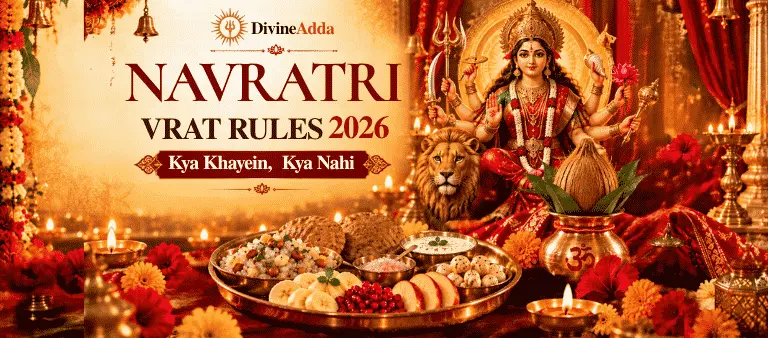
Sharad Navratri 2026 begins on Sunday, 11 October and ends with Vijayadashami on Tuesday, 20 October. If you are keeping the Navratri vrat, the big questions are always the same: Navratri ke vrat mein kya kha sakte hain? Kya nahi khana chahiye? Kya chai-coffee pee sakte hain? Vrat kab aur kaise kholein? This guide answers all of them in one place: the allowed food list, foods to avoid, spice and salt rules, rules for couples, a simple 9-day plan and the paran timing.
Customs differ by family, region and sampradaya. Where there is a difference of practice, we say so. Follow your own family tradition first.
Navratri 2026 Kab Se Hai? Dates at a Glance
- Navratri begins: Sunday, 11 October 2026 (Ghatasthapana, Pratipada)
- Durga Ashtami: Sunday, 18 October 2026
- Maha Navami: Monday, 19 October 2026
- Vijayadashami (Dussehra): Tuesday, 20 October 2026
For Delhi, the Ghatasthapana muhurat is about 6:19 AM to 10:12 AM on 11 October. Check your city's panchang for the exact time. Full details are on our Sharad Navratri 2026 page, and you can see the next festivals on our festival calendar.
Looking for March dates? Chaitra Navratri 2026 was observed from 19 to 27 March. The one now beginning is Sharad (Shardiya) Navratri.
Navratri Vrat Kitne Prakar Ke Hote Hain? Types of Navratri Fast
There is no single way to fast. Choose what suits your health and tradition:
- Full 9-day fast: Phalahar and vrat food for all nine days.
- First and last day only: Many people fast on Pratipada (day 1) and Ashtami or Navami.
- Only Ashtami or Navami: Common for those who cannot fast for long.
- Ekabhukta (one meal a day): A single satvik vrat meal, with fruit or milk if needed.
- Nirjala: Without food and water. This is very strict and only suitable for healthy adults.
If you are fasting for the first time, start with the first and last day, or a fruit-and-milk fast, and build up gradually.
Navratri Vrat Mein Kya Khayein? Allowed Foods (Vrat Khana List)
These are the foods most commonly accepted during the Navratri vrat:
Flours and grains substitutes (vrat ka atta)
- Kuttu atta (buckwheat flour)
- Singhare ka atta (water chestnut flour)
- Rajgira or ramdana (amaranth)
- Samak ke chawal (barnyard millet or sama rice)
- Sabudana (tapioca pearls)
- Makhana (fox nuts)
Vegetables
- Aloo (potato) and shakarkandi (sweet potato)
- Kaddu (pumpkin), lauki (bottle gourd), arbi (colocasia) and raw banana
- Cucumber, carrot and tomato (accepted in many homes)
- Green chilli, ginger and fresh coriander
Dairy
- Milk, curd, buttermilk, paneer, ghee and malai
Fruits, nuts and sweeteners
- All fresh fruits and coconut water
- Almonds, cashews, walnuts, raisins, dates and peanuts
- Sugar, jaggery and honey
Cooking medium: ghee, or peanut oil if your family allows it.
Navratri Vrat Mein Kya Nahi Khana Chahiye? Foods to Avoid
- Grains: wheat atta, maida, suji, rice, besan and all regular flours
- Pulses and dals: moong, chana, masoor, urad, rajma and chole
- Onion and garlic (tamasic foods)
- Regular table salt. Use sendha namak instead
- Non-vegetarian food, eggs and alcohol
- Tobacco and other intoxicants
- Packaged snacks, bread and ready mixes that contain grain flour, onion or garlic powder, or regular salt. Read the label.
Foods families differ on: haldi (turmeric), hing, mustard seeds, regular red chilli powder, garam masala and tomato. Many families avoid some of these. Follow what your family does.
Kya Navratri Ke Vrat Mein Chai-Coffee Pee Sakte Hain?
This is one of the most searched questions, and the honest answer is: it depends on your tradition and how strict your fast is.
- Many families allow it. Milk is a vrat food, so tea or coffee made with milk and sugar (no grain-based additives) is accepted in many homes.
- Strict satvik observers avoid it. Caffeine is a stimulant, and some people give it up during the nine days as part of discipline.
- Practical tip: Tea or coffee on an empty stomach can cause acidity during a fast. If you do have it, keep it light, have it after fruit or milk, and drink plenty of water. Herbal tea, lemon water, coconut water, lassi and buttermilk are easier alternatives.
Sendha Namak and Vrat Spices
Use sendha namak (rock salt) instead of regular salt. Safe choices for flavour are jeera (cumin), black pepper, green cardamom, cloves, green chilli, ginger and fresh coriander. Check packaged sendha namak and masala labels, since some brands add anti-caking agents or mix in regular salt.
Navratri Vrat Rules: Do's and Don'ts Beyond Food
Do
- Start the day with a bath and a short prayer
- Keep your home, kitchen and puja space clean, and use fresh utensils for vrat food
- Eat satvik food in moderate portions, and drink water often
- Chant mantras, read the Durga Saptashati or Devi Mahatmya, and attend the evening aarti
- Practise patience, truthfulness and kind speech
Don't (as per common custom)
- Don't eat onion, garlic, grains or non-vegetarian food
- Many families avoid cutting hair or nails, shaving and using leather items during the nine days
- Avoid sleeping through the day, anger, gossip and arguments
- Avoid over-eating at one go when you break the fast each day
Navratri Vrat Rules for Couples
Many families follow brahmacharya (abstinence) and satvik living for the nine days, and this is one of the most common searches around Navratri. Traditionally, couples observe restraint, spend time in shared prayer and keep the home calm and pure. It is a matter of personal and family belief, so couples should decide together and respect each other's choices.
How to Do Navratri Fast for 9 Days: A Simple Day Plan
A fast works best when it is steady and not too heavy. A typical day:
- Morning: Warm water or lemon water, then fruit, a glass of milk and soaked almonds
- Mid-morning: Coconut water or buttermilk
- Lunch: Kuttu or singhare ki roti with lauki, kaddu or aloo sabzi (sendha namak) and curd. Or samak ke chawal with sabzi.
- Evening: Fruit chaat, roasted makhana or a handful of dry fruits
- Dinner: Sabudana khichdi with peanuts and potato, or kuttu or singhare ki puri with sabzi. Keep it light.
- Before bed: Warm milk
Tips for 9 days
- Drink 8 to 10 glasses of water through the day
- Do not skip meals for long, and avoid too much fried food
- Eat fruit and vegetables daily, not just fried vrat snacks
- Keep activity gentle and rest when you feel tired
For the logic behind fasting and how to prepare the body, read our guide on the spiritual and scientific side of Ekadashi fasting.
Navratri Vrat Vidhi: Daily Puja Routine
- Wake early, bathe and wear clean clothes.
- Set up the puja space. If you need a layout, see our guides on how to set up a home puja space and the Vastu of the puja room.
- Perform Ghatasthapana on Day 1 in the muhurat, installing the kalash with water, mango leaves and a coconut.
- Take the sankalp to keep the vrat for the days you have chosen.
- Light a diya and offer flowers, fruit and a simple bhog to the form of Durga for that day.
- Chant mantras (see below) and read the Devi Mahatmya if you can.
- Do the aarti in the evening and share the prasad.
- On Ashtami or Navami, perform Kanya Puja and the closing puja as per your family tradition.
Mantras to Chant During Navratri Vrat
Begin each day's puja by remembering Ganesha with Om Gam Ganapataye Namaha. In the morning, you can also chant the Gayatri Mantra, which is also revered as a Devi mantra. You can explore more in our mantras library.
Durga beej mantra
ॐ दुं दुर्गायै नमः
Om Dum Durgayai Namah
Navarna mantra
ॐ ऐं ह्रीं क्लीं चामुण्डायै विच्चे
Om Aim Hreem Kleem Chamundayai Vichche
Devi Suktam verse (Devi Mahatmya)
या देवी सर्वभूतेषु शक्तिरूपेण संस्थिता ।
नमस्तस्यै नमस्तस्यै नमस्तस्यै नमो नमः ॥
Ya Devi Sarvabhuteshu Shakti-Rupena Samsthita | Namastasyai Namastasyai Namastasyai Namo Namah ||
A mala of 108 repetitions is the traditional count. If time is short, even 11 or 21 repetitions with focus is meaningful.
Navratri Vrat Katha (Short)
According to the Devi Mahatmya in the Markandeya Purana, King Suratha lost his kingdom and a merchant named Samadhi was cast out by his own family. Both met the sage Medha, who told them the glory of the Goddess. They worshipped Devi with devotion and were blessed, and the tradition of Navratri worship is linked to this teaching. You can read the central story of the festival in Durga and Mahishasura: The Battle That Began Navratri.
Navratri Vrat Paran: When and How to Break the Fast
Paran means formally ending the fast. In 2026, the closing days fall on:
- Maha Navami: 19 October
- Vijayadashami: 20 October
Practice varies:
- Many families who fast until Navami break the fast after the Navami havan and Kanya Puja on 19 October.
- Others complete the vrat on the morning of Vijayadashami (20 October), after the closing puja.
Check your local panchang for the exact tithi and paran time. Break the fast with a light, satvik meal. Start with fruit, milk or a little prasad, and avoid a heavy meal right away. See the Dussehra 2026 page for Vijayadashami details.
Who Should Be Careful with a Navratri Fast?
Pregnant and breastfeeding women, children, elderly people, and anyone with diabetes, blood pressure, acidity, kidney or heart conditions should consult a doctor before a strict fast. Many vrat foods, such as sabudana, potato and kuttu, are high in carbohydrates, so people with diabetes should keep portions modest and monitor sugar. A modified vrat with fruit, milk and light food is accepted by many priests. Health and a calm mind come first.
Navratri Vrat Rules in Hindi (संक्षेप में)
क्या खा सकते हैं? कुट्टू, सिंघाड़ा, राजगीरा, समा के चावल, साबूदाना, मखाना, आलू, शकरकंद, लौकी, कद्दू, फल, दूध, दही, पनीर, घी और सेंधा नमक।
क्या नहीं खाना चाहिए? गेहूं, चावल, दाल, प्याज, लहसुन, साधारण नमक, मांस, अंडा और शराब।
व्रत में चाय-कॉफी? कई परिवारों में दूध वाली चाय-कॉफी मान्य है, पर कठोर व्रत में लोग इसे छोड़ देते हैं। अपनी परंपरा का पालन करें।
व्रत का पारण कब? 19 अक्टूबर (महानवमी) को हवन और कन्या पूजन के बाद, या 20 अक्टूबर (विजयादशमी) की सुबह पूजा के बाद। सही समय अपने शहर के पंचांग से देखें।
Related Navratri and Festival Guides
- Sharad Navratri 2026: dates, Ghatasthapana and puja
- Dussehra 2026: date and significance
- Karwa Chauth 2026: date, puja vidhi and katha (29 October)
- Vastu tips for Diwali 2026 (8 November)
- Explore more on the Devi and Shakti topic hub
Want guidance for your own chart this Navratri? Generate your free Kundli or ask the DivineAdda AI assistant.